
Updated October 2026
Most aesthetic training starts with products and techniques. Yet ask experienced injectors what made the biggest difference early in their careers, and many will say it was watching someone skilled handle real patients. How they read a face. How they answered a nervous first-timer. How they said no to a request that wasn't right.
That kind of learning is hard to get from a slide deck. This article looks at what shadowing teaches, how it fits into a broader aesthetic training path, which clinicians benefit most, and what a half-day observation experience in Needham, Massachusetts looks like.
Why Isn't Clinical Education Enough for Aesthetic Practice?
Traditional clinical education prepares providers to diagnose and treat illness, while aesthetic medicine centers on elective care, artistry, and patient expectations. Many skills transfer, but the consultation style, business model, and decision-making are different. Shadowing helps close that gap by showing how the work looks day to day.
A nurse practitioner may be excellent at managing chronic conditions and still feel unsure how to discuss facial balance with a patient who wants "a refreshed look." A physician may know facial anatomy thoroughly and still be new to pricing conversations, follow-up schedules, and managing aesthetic expectations. These are practical skills that grow fastest through exposure.
Aesthetic procedures also keep growing in popularity. The American Society of Plastic Surgeons' 2025 procedural statistics show neuromodulators and fillers leading minimally invasive treatments, which means more patients are arriving informed, curious, and selective about their provider.
What Does Shadowing Teach That Courses Often Miss?
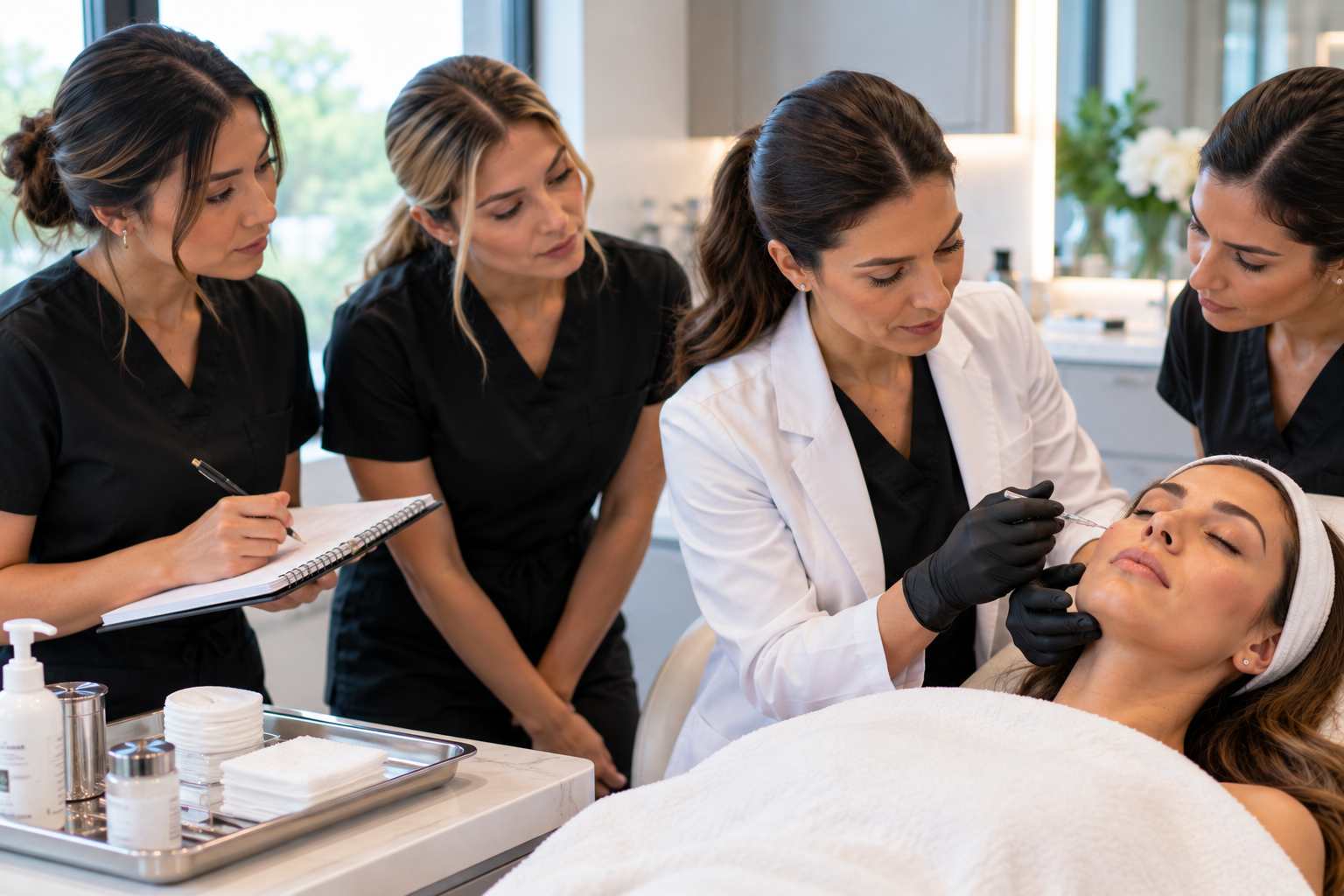
Shadowing teaches judgment, communication, and workflow by letting you watch an experienced provider handle real situations. You see how assessments unfold, how patients are guided through options, and how a clinic runs from one appointment to the next. It complements hands-on training rather than replacing it.
How experienced providers assess patients
Watching an expert assess a face in real time shows you what they notice first, what they ask about, and how they prioritize concerns. You begin to understand that a treatment plan starts with listening, not with a syringe.
How consultations build trust
You will see how a provider explains options, addresses fears, sets realistic expectations, and handles patients who want something that would not serve them well. These moments shape patient loyalty more than almost anything else.
How the business side actually works
Observation also reveals the operational side of aesthetics: supplies, scheduling, documentation, software, and how the clinical day flows. For anyone considering their own practice someday, that context is valuable.
Who Should Consider Shadowing Before Committing to Aesthetic Training?
Shadowing is a strong fit for clinicians who are exploring aesthetics, newly entering the field, or trying to decide which training to pursue next. Registered nurses, nurse practitioners, physician assistants, physicians, and aspiring practice owners can all gain clarity from seeing the work firsthand.
Registered nurses considering aesthetics often want to know what the role looks like before investing in procedure courses. Observing a real practice provides that picture.
Nurse practitioners and physician assistants moving from primary care, urgent care, or hospital settings can see how aesthetic visits differ in pace, tone, and decision-making.
Physicians exploring a career shift or a second service line can observe how aesthetic consultations and patient relationships work in an elective setting.
New aesthetic injectors who have taken an introductory course but still feel uncertain can benefit from watching an experienced provider work through real cases.
Aspiring practice owners gain insight into supplies, software, and business practices before making major decisions.
Experienced injectors looking for deeper, longer-term support may find a mentorship program a better fit, since it combines shadowing with business guidance and follow-up.
What Happens During the Basic Shadowship in Needham?
Elite Academy's Basic Shadowship is a half-day, in-person observation experience in Needham with Dr. Joelle Lieman. It starts with a career-focused Q&A, includes four hours observing a variety of procedures and patient interactions, and ends with a debrief and a follow-up Zoom call within three months.
According to the Basic Shadowship course page, the experience includes:
- A 30-minute introductory Q&A on your career goals
- Four hours observing a variety of procedures and patient interactions
- A wrap-up debrief on injection techniques, supplies, business practices, and software
- A follow-up Zoom call within three months
Because it is an observation experience, participants watch rather than inject. The specific procedures seen depend on the day's patient schedule. That real-world variety is part of the value: you see aesthetic medicine as it happens, not as a scripted demonstration.
Dr. Lieman is a Board Certified Obstetrician and Gynecologist and member of the American Academy of Aesthetic Medicine. Learn more about her background on the About page.
How Does Shadowing Fit Into a Complete Aesthetic Training Path?
Shadowing works best as a starting point or a bridge. Many providers observe first, then move into hands-on courses for specific procedures, and eventually into mentorship as their practice grows. Each format builds a different layer of skill.
After shadowing, providers who want supervised procedural experience can explore Sculptra: Beyond the Label (Face + Body) or the Vampire® Series Intensive Hands-On Training, both held in Needham. Experienced injectors ready to grow a clientele or launch a medspa can look at Elite Mentorship+, a three-month program that includes four hours shadowing Dr. Lieman along with business and consultation guidance.
What Should You Know About Scope of Practice Before You Start?
Observation does not change what you are permitted to do. Your ability to perform aesthetic procedures in Massachusetts depends on your license, supervision arrangements, and board rules. Confirm your scope early so your training choices align with your career path.
Physicians can review requirements through the Massachusetts Board of Registration in Medicine, and nurses and nurse practitioners through the Massachusetts Board of Registration in Nursing. Professional organizations such as the American Academy of Aesthetic Medicine also offer perspective on the specialty and its educational standards.
Why Train in Needham?
Needham sits in Norfolk County just west of Boston, making it accessible for providers across Greater Boston, MetroWest, and beyond. All Elite Academy in-person training takes place at 1 Chapel St, Needham, MA 02492, inside Elite Medspa + Wellness Center.
For visiting providers, the Where to Stay page notes that Needham is about 13 miles from Logan International Airport and lists hotels within roughly a 10-minute drive. There is a public lot beside the building and metered parking along Chapel Street.
Frequently Asked Questions
What is aesthetic shadowing?
Aesthetic shadowing is an observation experience in which a clinician watches an experienced provider assess patients, perform procedures, and manage a working practice. It builds judgment and context rather than hands-on injection skill.
Do you inject during the Basic Shadowship?
No. The Basic Shadowship is an observation experience. Participants watch procedures and patient interactions, then discuss techniques, supplies, and business practices during a debrief.
Is shadowing good for new aesthetic providers?
Yes. It is especially helpful for new providers or clinicians exploring aesthetics, since it shows what daily practice looks like before they commit to procedure-specific training.
Can nurses shadow in aesthetic medicine in Massachusetts?
Licensed providers, including registered nurses, can pursue observation experiences. Performing procedures is a separate matter governed by scope of practice and board rules.
How long is the Basic Shadowship?
It is a half-day, in-person experience in Needham, including a Q&A, four hours of observation, a debrief, and a follow-up Zoom call within three months.
See It, Learn It, Own It
Sometimes the most useful thing you can do before choosing a training path is simply watch an expert work. A half day of observation can answer questions you didn't know to ask and point you toward the right next step with far more clarity.
Explore the Basic Shadowship, browse all Courses + Programs, or read where to find real aesthetic training in Needham. Have questions? Contact the Elite Academy team or visit the Elite Academy homepage.


