
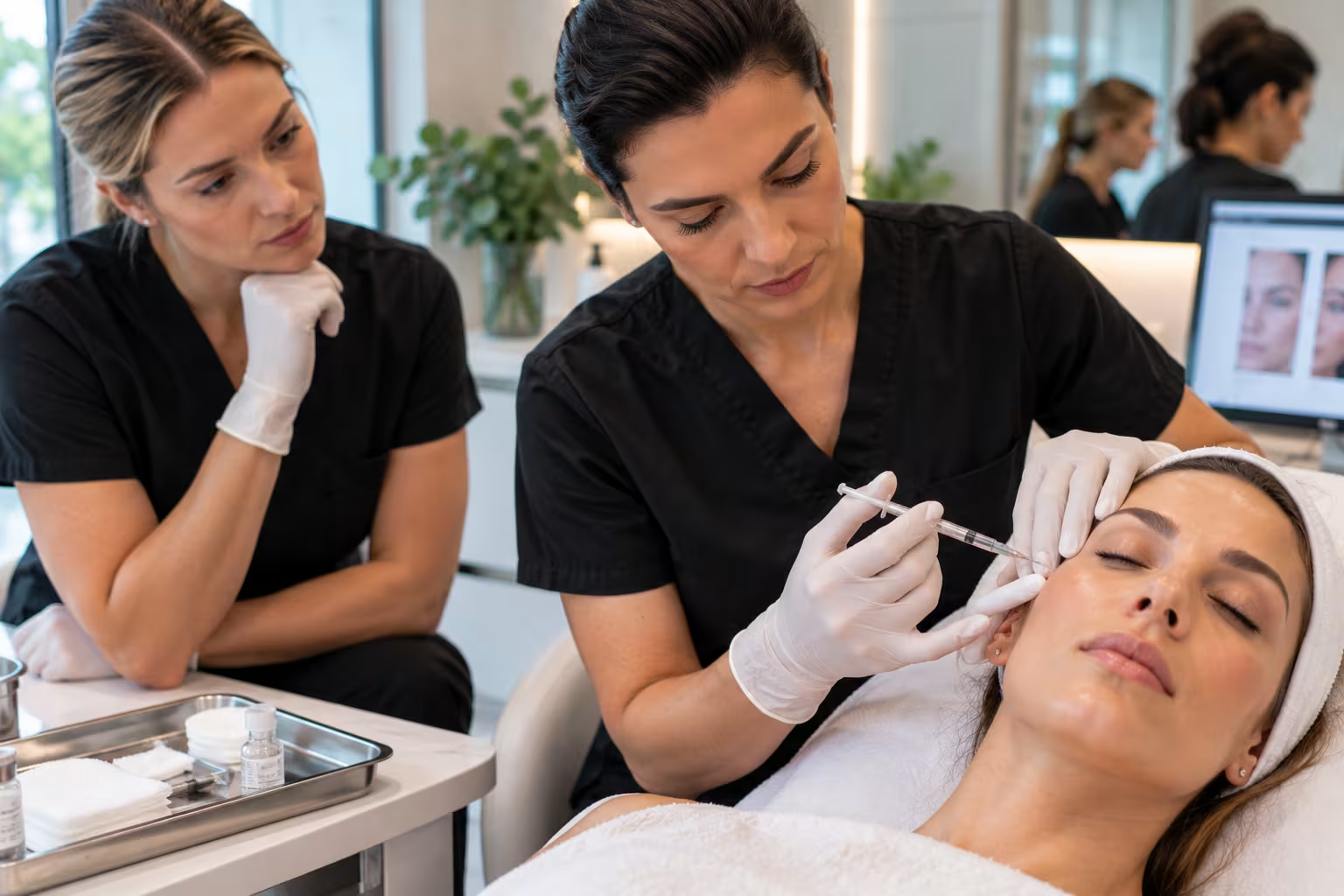
Watch two providers perform the same injectable treatment and the difference is rarely about the product they are using. It is almost always about the hundreds of small decisions happening beneath the surface, where to place the needle, how much product to use, how to read a patient's facial anatomy, and how to adjust on the fly when something does not look quite the way a textbook diagram suggested it would. That kind of judgment does not come from a single weekend course. It comes from real, supervised, hands on practice.
Cosmetic injectable training is one of the most in demand paths in aesthetic medicine right now, but it is also one of the areas where skipping proper foundational training carries the highest risk. This article looks at what separates thorough injectable training from a rushed certificate, the complications that stem from undertrained providers, and how professionals in Topsfield, Massachusetts can build genuine competency through Elite Academy.
What Risks Come From Inadequate Injectable Training?
Injectable treatments, whether neuromodulators or dermal fillers, involve working close to sensitive facial anatomy, including blood vessels and nerves. The American Society of Plastic Surgeons has published extensive patient safety guidance highlighting that complications, ranging from bruising and asymmetry to more serious vascular events, are strongly associated with provider experience and training depth rather than the product itself.
Common issues tied to undertrained injectors include:
- Asymmetrical results from inconsistent product placement
- Overfilled or unnatural looking outcomes from a lack of restraint or technique
- Vascular complications from improper injection depth or angle
- Poor patient communication leading to mismatched expectations
- Limited ability to recognize or manage rare but serious complications
Understanding these risks is not meant to be alarming. It is meant to underscore why structured, hands on cosmetic training matters so much more than a quick online certificate.
Who Can Legally Become a Cosmetic Injector in Massachusetts?
Scope of practice for injectable treatments in Massachusetts depends on licensure, and requirements can vary for physicians, nurse practitioners, physician assistants, and registered nurses. Providers should always confirm current scope of practice regulations through the Massachusetts Board of Registration in Medicine or their respective licensing board before pursuing injectable training, since regulations can be updated over time.
What Does Thorough Injectable Training Actually Include?
A meaningful training program goes far beyond watching a demonstration video. It should build both technical skill and clinical judgment through direct, repeated practice.
Facial Anatomy Mastery
Understanding the layers of facial anatomy, including the location of major blood vessels and nerves, is the foundation every safe injector needs before ever touching a syringe to a patient.
Live Hands On Practice
Supervised practice on real patients, under the direct guidance of an experienced provider, is where technical confidence is actually built. This is a core part of how Elite Academy structures its training, rather than relying solely on lecture based instruction.
Complication Recognition and Management
Even skilled providers occasionally encounter complications. Knowing how to recognize early warning signs and respond quickly is a critical, often underemphasized part of injectable training.
Where Can Providers in Topsfield Build This Skill Set?
Elite Academy, founded by Dr. Joelle Lieman, a board certified OB/GYN with more than ten years of experience across clinical practice and aesthetic education, offers several pathways for building injectable competency.
Sculptra: Beyond the Label
For providers interested in volume restoration and biostimulatory injectables, the Sculptra: Beyond the Label course covers both facial and body applications in a hands on format. Full details are available on the Sculptra product page.
Vampire Series Training
Providers looking to expand into PRP based injectable techniques can pursue the Vampire Series: Intensive Hands On Training, which covers a range of PRP applications including facial rejuvenation and intimate wellness procedures.
The Elite Mentorship Program
For providers who want a broader, more immersive path into aesthetic injectables and practice growth together, the Elite Mentorship Program offers three months of combined clinical mentorship and business guidance under Dr. Lieman's direct involvement.
Basic Shadowship for a Preview First
Providers who are not yet ready to commit to a full course can start with the Basic Shadowship experience, observing real injectable consultations and treatments during a half day immersive session.
What Should Providers Look for When Choosing Where to Train?
Not every training program offers the same depth of hands on practice. Providers evaluating options should ask how much live patient practice is included, how small the training cohort is, and whether the instructor maintains an active clinical practice alongside their teaching. Programs led by providers who are still practicing day to day, like Dr. Lieman, tend to reflect more current, real world clinical judgment than programs run purely by instructors.
How Does Cohort Size Affect Learning?
Smaller cohorts mean more individualized feedback during hands on practice, which directly affects how quickly a provider builds genuine confidence rather than simply memorizing steps.
How Does This Training Translate Into Practice Growth?
Providers who complete thorough injectable training typically see a meaningful shift in how they approach consultations. Instead of hesitating or referring patients elsewhere, they can confidently recommend and deliver treatments, which tends to improve both patient satisfaction and practice revenue over time. That confidence, paired with strong technique, is often what separates a practice that merely offers injectables from one that becomes known for them.
The Steady Hands Conclusion
Becoming a skilled cosmetic injector is not about rushing to add a new service to a price list. It is about building the kind of judgment and technical steadiness that keeps patients safe and coming back. That foundation is built through repetition, mentorship, and training led by someone who has spent real time in the room with patients.
If you are ready to build that foundation, explore Elite Academy's full course offerings or contact the academy to discuss training options available in Topsfield. This article was updated in August 2026 to reflect current course offerings and safety guidance.
Frequently Asked Questions
What license do I need to become a cosmetic injector in Massachusetts? Requirements vary depending on your professional license. Providers should confirm current scope of practice rules through the Massachusetts Board of Registration in Medicine or their relevant licensing board.
How long does it take to become confident with injectables? Confidence builds through repeated, supervised practice. Programs that include live hands on training, like those offered at Elite Academy, are designed to accelerate that learning curve.
Is Sculptra training different from neuromodulator or filler training? Yes. Sculptra is a biostimulatory injectable focused on gradual volume restoration, which involves different technique considerations than traditional dermal fillers or neuromodulators.
Can I start with an observational experience before full training? Yes. The Basic Shadowship program offers a half day observational experience for providers who want to see real injectable consultations before committing to a full course.
Can this training be combined with other Elite Academy programs? Yes. Many providers pair injectable technique training with the Elite Mentorship Program for a more complete clinical and business foundation.
.png)

