
Updated: July 2026
The demand for non-surgical facial rejuvenation continues to grow as more patients seek natural-looking enhancements with little to no downtime. As aesthetic medicine evolves, so does the need for well-trained providers who understand both the science and artistry behind cosmetic procedures.
For healthcare professionals looking to expand their skills, Cosmetic Training provides an opportunity to develop practical techniques while gaining confidence in patient assessment and treatment planning. Whether you're just entering aesthetics or adding new services to an existing practice, the right education can help you build a rewarding career focused on facial rejuvenation.
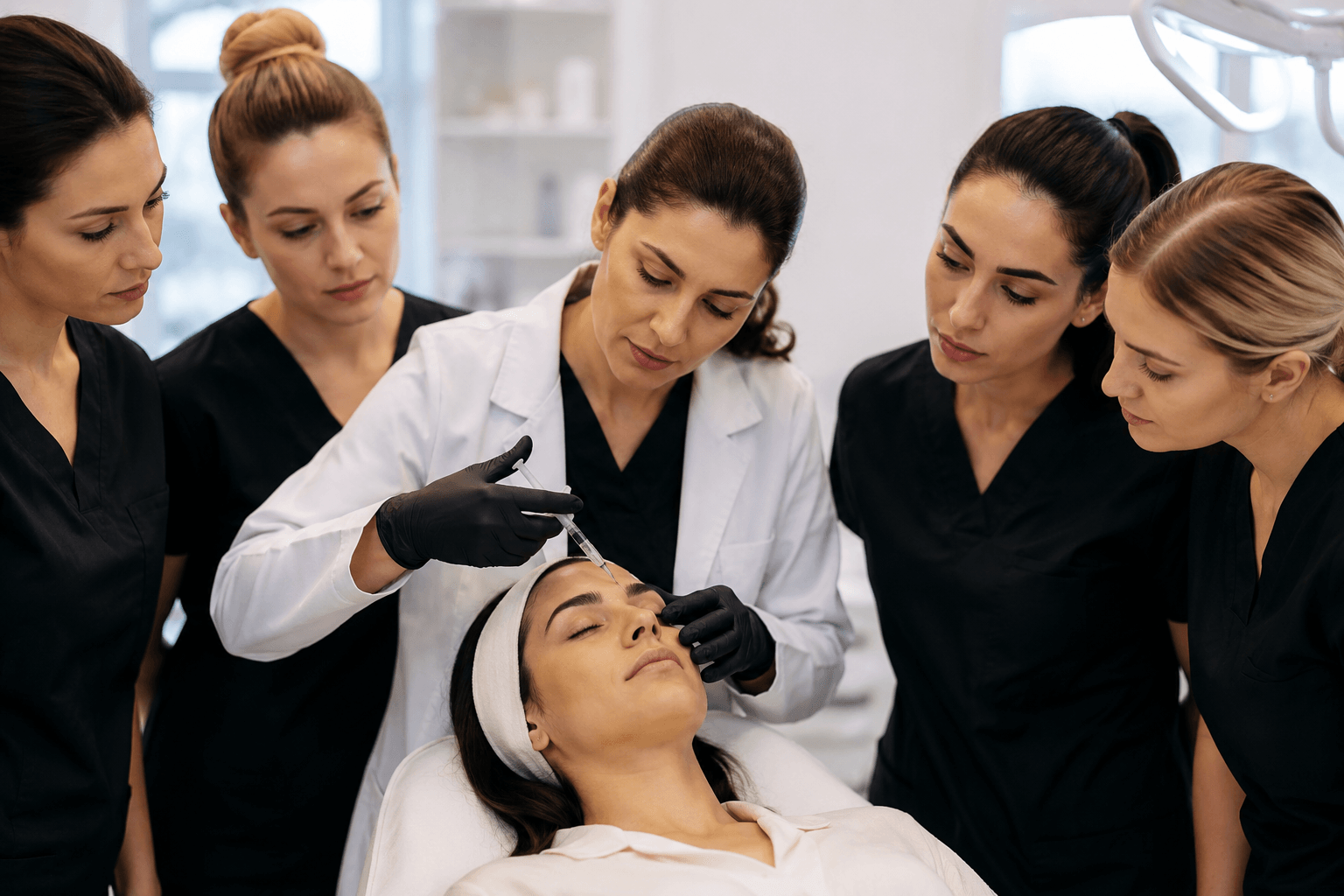
At My Elite Academy, students receive hands-on education designed to prepare them for real-world patient care while learning from experienced instructors. With training opportunities in Topsfield and Needham, Massachusetts, aspiring injectors can develop skills that support long-term professional growth.
What Does Cosmetic Injectable Training Include?
One of the biggest misconceptions about Cosmetic Training is that it focuses only on learning how to inject products. In reality, a quality program teaches much more than injection techniques.
Comprehensive Cosmetic Injectables education typically includes:
- Facial anatomy and aging patterns
- Patient consultation techniques
- Treatment planning
- Injection safety
- Product selection
- Hands-on clinical practice
- Managing patient expectations
- Understanding complications and prevention
- Ethical patient care
- Business fundamentals for aesthetic professionals
A well-rounded curriculum helps students understand why treatments are performed, not simply how to perform them.
Practical experience is especially valuable because facial rejuvenation requires precision, confidence, and an understanding of each patient's unique anatomy.
Who Is the Ideal Candidate for Cosmetic Training?
One of the strengths of Aesthetic Training is that professionals from several healthcare backgrounds can benefit from expanding their expertise.
Ideal candidates often include:
Registered Nurses (RNs)
Many registered nurses enter aesthetics because they enjoy combining clinical knowledge with artistic treatment planning.
Nurse Practitioners (NPs)
Nurse practitioners often incorporate injectable treatments into existing wellness or aesthetic practices.
Physician Assistants (PAs)
PAs can expand their procedural skills while offering patients additional cosmetic treatment options.
Physicians
Family physicians, emergency physicians, and specialists frequently pursue aesthetic education to diversify their practice.
Dentists
Many dentists already possess extensive knowledge of facial anatomy, making facial rejuvenation a natural extension of their clinical skills where permitted by state regulations.
Healthcare Professionals Interested in Aesthetic Medicine
Professionals who enjoy patient interaction, precision-based procedures, and continuous education often find Aesthetic Medicine to be an exciting career path.
What Cosmetic Injectables Should Every New Injector Learn?
Not every injectable serves the same purpose. Understanding product categories allows providers to recommend treatments based on individual patient goals rather than following a one-size-fits-all approach.
New injectors should become familiar with:
Neuromodulators
These treatments help soften dynamic facial lines caused by repeated muscle movement.
Dermal Fillers
Dermal Fillers restore lost facial volume, improve contour, and enhance facial balance. Proper filler education includes product selection, facial assessment, and safe injection techniques.
Biostimulatory Injectables
Products like Sculptra stimulate collagen production over time, offering gradual improvements in facial volume and skin quality. Understanding when to recommend collagen stimulators versus traditional fillers is an important part of advanced injector education.
Other injectable treatments may be discussed depending on the curriculum and evolving industry standards.
Programs may also introduce students to the consultation process surrounding treatments like Kybella, although training content varies by academy and course selection.
Why Are Dermal Fillers and Sculptra Important Skills?
Facial rejuvenation rarely relies on a single product.
As patients seek natural-looking outcomes, providers increasingly combine different treatment approaches to address multiple signs of aging.
Learning Dermal Fillers helps practitioners understand:
- Mid-face volume restoration
- Lip enhancement
- Chin projection
- Jawline definition
- Tear trough correction when appropriate
Meanwhile, Sculptra introduces a different treatment philosophy by stimulating collagen rather than providing immediate volume.
Understanding both approaches allows injectors to create personalized treatment plans based on facial anatomy, aging patterns, and long-term goals.
Patients today often value subtle enhancement over dramatic transformation, making comprehensive injectable education more important than ever.
How Does Hands-On Aesthetic Training Improve Confidence?
Reading textbooks and watching instructional videos can provide valuable knowledge, but confidence develops through supervised practice.
Hands-on Aesthetic Training helps students:
- Develop proper injection techniques
- Improve hand positioning
- Learn product placement
- Understand facial landmarks
- Build patient communication skills
- Gain real-time instructor feedback
Working with experienced educators allows students to ask questions, refine techniques, and better understand how classroom knowledge translates into clinical practice.
Confidence comes from repetition, mentorship, and experience.
What Should You Look for in a Cosmetic Training Program?
Not every training program offers the same educational experience.
Before enrolling, consider whether the program includes:
Experienced Instructors
Learning from providers actively practicing aesthetic medicine offers practical insights beyond textbooks.
Small Class Sizes
Smaller groups often allow for more individualized instruction and greater hands-on opportunities.
Comprehensive Curriculum
Look for programs that cover:
- Facial anatomy
- Injection safety
- Consultation skills
- Patient assessment
- Treatment planning
- Practical application
Hands-On Learning
Clinical experience remains one of the most valuable components of Cosmetic Training because it bridges the gap between theory and patient care.
Ongoing Education
The aesthetics industry changes rapidly. Continuing education helps providers stay current with evolving techniques, products, and best practices.
Why Choose Cosmetic Training in Topsfield or Needham, Massachusetts?
Location matters when selecting an academy that supports your educational goals.
Students benefit from learning in an environment focused on:
- Evidence-based instruction
- Practical skill development
- Hands-on education
- Professional mentorship
- Career advancement
Whether you're starting your journey into aesthetic medicine or expanding an existing practice, local training can provide valuable networking opportunities with fellow healthcare professionals and experienced instructors.
For those interested in broadening their understanding of patient care, related topics such as Wellness Consultation, Facials, Chemical Peel, and Hormone Therapy may also be explored from an educational perspective as part of the wider field of aesthetic and wellness medicine. Availability of specific educational offerings depends on the academy's current course catalog.
Building a Long-Term Career in Facial Rejuvenation
The aesthetic industry continues to evolve as patients seek individualized treatment plans and natural-looking results.
Providers who invest in quality education position themselves to:
- Expand their clinical skills
- Improve patient outcomes
- Increase career opportunities
- Build confidence with injectable procedures
- Stay current with advances in aesthetic medicine
Strong foundational education also creates opportunities for continued specialization as new technologies and treatment techniques emerge.
Rather than learning isolated procedures, successful injectors develop a comprehensive understanding of facial anatomy, patient communication, safety, and treatment planning that supports long-term professional success.
Frequently Asked Questions
How long does cosmetic training usually take?
Program length varies depending on the academy, course level, and whether students enroll in introductory or advanced training. Many programs combine classroom instruction with hands-on clinical experience.
Do I need previous experience before enrolling in cosmetic training?
Many introductory Cosmetic Training programs are designed for licensed healthcare professionals who are new to aesthetics, while advanced courses build upon existing injector experience.
Why is hands-on aesthetic training so important?
Hands-on Aesthetic Training allows students to practice techniques under instructor supervision, improving confidence, precision, and patient safety.
Are dermal fillers difficult to learn?
Learning Dermal Fillers requires understanding facial anatomy, product characteristics, and injection techniques. Comprehensive education and supervised practice help students build these skills over time.
Why is Sculptra included in many cosmetic training programs?
Because Sculptra stimulates collagen production differently than traditional fillers, learning when and how it fits into facial rejuvenation helps providers create more personalized treatment plans.
Where can healthcare professionals receive cosmetic training in Massachusetts?
Healthcare professionals interested in expanding their aesthetic skills can explore educational opportunities through My Elite Academy in Topsfield and Needham, Massachusetts, depending on available courses and eligibility requirements.
Your Next Chapter Starts with the Right Training
A successful career in facial rejuvenation begins with a strong educational foundation. The best Cosmetic Training programs combine expert instruction, practical experience, and ongoing mentorship to help healthcare professionals grow their confidence and clinical skills.
Whether your goal is to learn Cosmetic Injectables, expand your knowledge of Dermal Fillers and Sculptra, or pursue comprehensive Aesthetic Training, investing in quality education today can help prepare you for tomorrow's evolving field of aesthetic medicine.
For healthcare professionals considering their next career move, My Elite Academy's training opportunities in Topsfield and Needham, Massachusetts, provide an excellent starting point toward developing safe, effective, and patient-centered facial rejuvenation skills.
.png)

