
Most disappointing outcomes in sexual wellness care don't start in the treatment room. They start in the consultation, when a patient hears "this should help" and quietly translates it into "this will fix everything." By the time results arrive, the gap between what she expected and what is realistic has already been set.
For providers on the North Shore who offer, or are preparing to offer, sexual wellness services, expectation setting may be the most underrated clinical skill there is. This guide looks at what patients tend to expect, how to explain treatment value without overpromising, how to handle off-label options honestly, when a consultation should end in a referral, and how Topsfield-area clinicians can sharpen these skills online.
Why Do Expectations Make or Break a Sexual Wellness Consultation?
Expectations shape how patients judge their results, how they feel about your practice, and whether they return. In sexual wellness, where concerns are personal and many options are elective or off-label, an unclear consultation can turn a modest, reasonable outcome into a perceived failure.
Patients often arrive after months or years of hesitation. Some have read glowing stories online. Others are skeptical after being dismissed elsewhere. Either way, the consultation is your chance to replace guesswork with a clear, shared understanding of what is possible. A patient who expects gradual, variable improvement and receives it is far more satisfied than one who expected a transformation and got the same result.
What Do Patients Usually Expect When They Book a Wellness Consultation?
Many patients expect a single, quick solution to a concern that is usually multifactorial. They may also expect the provider to bring up the topic first. Understanding these assumptions early helps you reset them gently before any option is discussed.
The Mayo Clinic groups female sexual dysfunction into low desire, arousal difficulties, trouble reaching orgasm, and pain during intimacy. Patients rarely use those categories, and they often bundle several concerns together. Someone describing "everything changed after menopause" may be talking about dryness, discomfort, and lower desire at the same time, each with different contributing factors.
Common misconceptions providers hear
Patients may believe one procedure will address every concern, that results will be immediate, that "natural" means risk-free, or that a treatment working for a friend guarantees it will work for them. Naming these beliefs respectfully, without making the patient feel naive, is one of the most useful things you can do.
How Do You Explain Treatment Value Without Overpromising?
Explain value in terms of what an option may realistically do, how long it takes, how results vary, and what it will not address. Use conditional, specific language rather than broad promises. Patients trust providers who are clear about limits.
Value is not the same as hype. A strong explanation covers the goal of the option, the evidence behind it in plain language, the expected timeline, the number of sessions that may be involved, possible side effects, and what happens if results are modest.
Phrases that build trust
Statements such as "Some patients notice improvement over several weeks, and some notice very little," or "This may help with one part of what you described, but not the dryness," show honesty and clinical judgment. Inviting questions with "What would a good result look like for you?" helps you check alignment before moving forward.
Phrases worth retiring
Avoid words like "cure," "guaranteed," "permanent," or "like new." They create expectations no provider can responsibly meet and can undermine trust in your entire practice.
How Should Off-Label Options Be Disclosed and Documented?
Off-label options should be named as off-label, explained in plain language, and documented as part of informed consent. Patients should understand that the evidence is still developing and that individual results vary.
Platelet-rich plasma procedures such as the O-Shot® are generally considered off-label for sexual wellness concerns. The evidence is promising but still developing, and these procedures should never be presented as a cure for incontinence or sexual dysfunction. A good disclosure covers why you are suggesting the option, what is and is not known, alternatives (including no treatment and referral), and the patient's questions. Documenting that conversation protects both the patient and the provider.
When Should a Wellness Consultation End in a Referral?
A consultation should end in a referral whenever a concern needs evaluation or treatment outside your expertise or scope. New or worsening pain, symptoms that suggest an underlying medical condition, medication effects, or significant emotional distress are common reasons to refer.
Sexual wellness concerns often overlap with menopause, medications, pelvic floor function, mental health, and relationships. For example, the Mayo Clinic notes that when only vaginal symptoms such as dryness are present, low-dose vaginal estrogen is usually a better choice than systemic hormone therapy, which is a decision for the patient and her prescribing clinician. Interdisciplinary groups such as the International Society for the Study of Women's Sexual Health reflect how often this work requires a team. Referring well is a sign of confidence, not a lost opportunity.
Which Providers Need These Consultation Skills Most?
Any licensed provider who discusses sexual wellness with patients benefits from these skills. Nurse practitioners and physician assistants in women's health, physicians expanding into aesthetic or regenerative care, and medspa owners building a service line tend to feel the need most.
Nurse practitioners and physician assistants often lead the conversations that set expectations, so a consistent approach helps them stay efficient and thorough.
Physicians, particularly in women's health and primary care, may find that elective sexual wellness consultations call for a different communication style than problem-focused visits.
Registered nurses who support intake or patient education can reinforce accurate expectations, always within their own scope.
Medspa owners and aspiring practice owners benefit from standardizing how every provider on the team describes options, so patients hear the same honest message no matter who they see.
How Can North Shore Providers Build These Skills Without Leaving Their Practice?
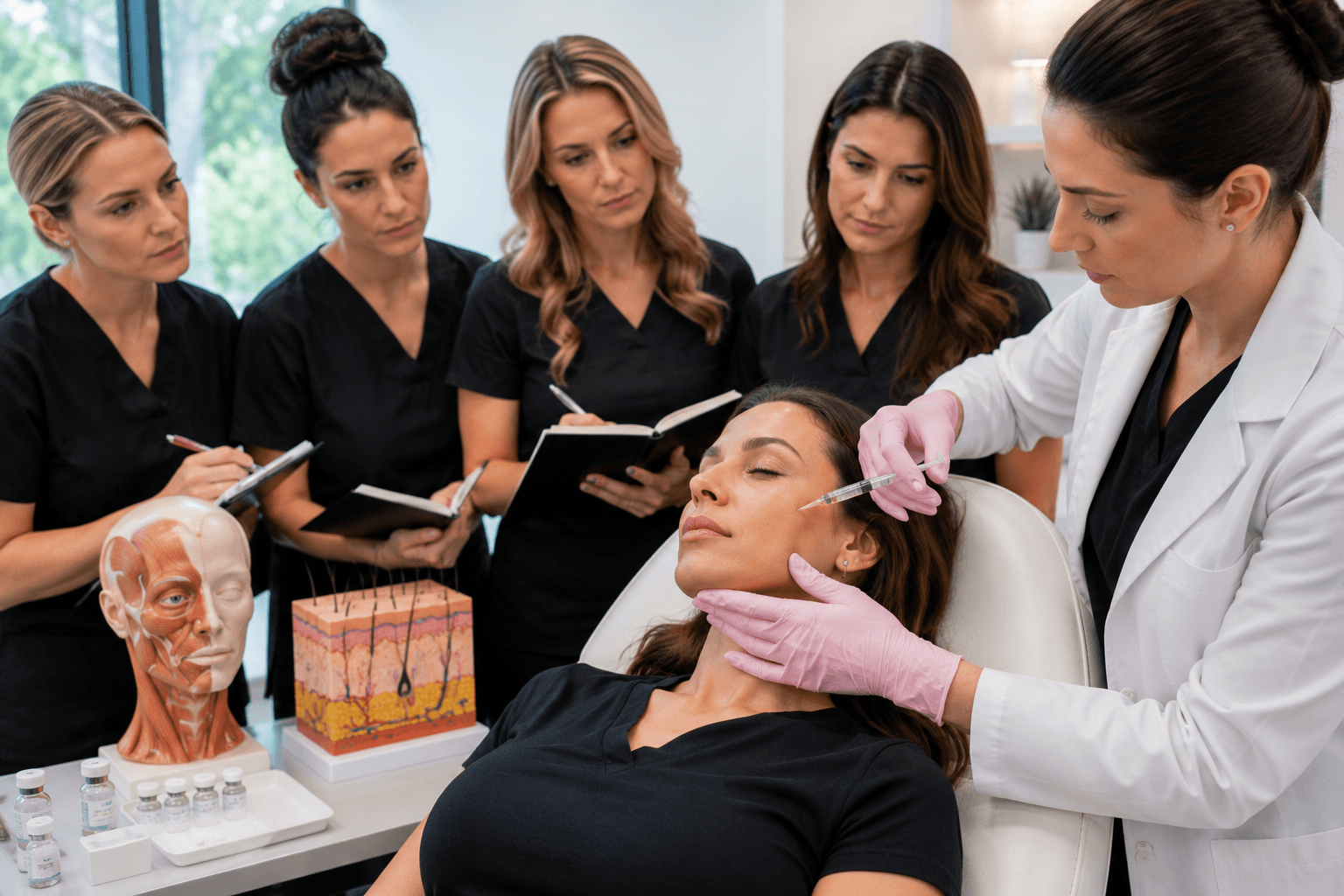
Topsfield and Essex County providers can start online. Elite Academy's consultation course is delivered as videos you can complete remotely, and its in-person hands-on training takes place only at the Needham location.
The Art of the Female Sexual Wellness Consultation includes three focused consultation videos on structuring conversations, addressing common patient concerns, communicating treatment value, setting clear expectations, and navigating sensitive discussions. Elite Academy's online training is intended exclusively for licensed medical providers, and access requires an account and a valid professional license through the provider sign-up page.
Providers who want procedure-level detail can explore O-Shot® Procedure in Detail, an online course of three in-depth clinical training videos focused on technique, workflow, and consistency. For in-person, hands-on training, the Vampire® Series Intensive Hands-On Training is held in Needham and includes a half-day option focused on the O-Shot® and P-Shot® procedures, with class sizes limited to five students per session.
Elite Academy was founded by Dr. Joelle Lieman, a Board Certified Obstetrician and Gynecologist and member of the American Academy of Aesthetic Medicine. You can read more on the About page.
What Should Massachusetts Providers Confirm About Scope of Practice?
Your ability to offer sexual wellness procedures depends on your license, supervision arrangements, and current board rules. Training builds knowledge and skill but does not on its own expand your scope of practice.
Physicians can review guidance from the Massachusetts Board of Registration in Medicine, nurses and nurse practitioners from the Massachusetts Board of Registration in Nursing, and physician assistants from the Massachusetts Board of Registration of Physician Assistants. Consultation and communication skills, meanwhile, are valuable across every role.
Frequently Asked Questions
What is the goal of a sexual wellness consultation?
The goal is to understand the patient's concerns, identify contributing factors, discuss appropriate options or referrals, and agree on realistic expectations before any treatment begins.
How do you set realistic expectations with patients?
Use specific, conditional language, explain timelines and variability, name what an option will not address, and ask patients to describe what a good result would look like for them.
Should providers tell patients a treatment is off-label?
Yes. Off-label options should be clearly identified, explained in plain language, and documented as part of informed consent.
When should a provider refer a sexual wellness patient?
Refer when symptoms suggest an underlying medical condition, involve new or worsening pain, relate to medications or hormones managed by another clinician, or fall outside your expertise or scope.
Can I take wellness consultation training online in Massachusetts?
Yes. Elite Academy's consultation course is offered online for licensed medical providers, so clinicians in Topsfield and across the North Shore can complete it remotely.
Is the O-Shot a cure for sexual dysfunction?
No. PRP use for sexual wellness is generally off-label, the evidence is still developing, and results vary from patient to patient.
Promise Less, Explain More: The Consultation Patients Remember
Patients rarely remember every detail of a consultation, but they remember whether they felt informed and respected. When you set honest expectations, disclose clearly, and refer when it is right, you help build the kind of trust that encourages patients to return and recommend your practice.
To strengthen these skills, explore The Art of the Female Sexual Wellness Consultation and Elite Academy's other offerings on the Courses + Programs page. Have questions about which option fits your goals? Contact the Elite Academy team or start on the Elite Academy homepage.