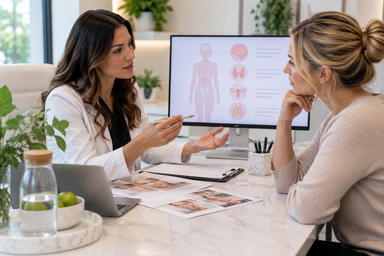
If you're a nurse, nurse practitioner, physician assistant, or physician who keeps hearing the phrase "aesthetic medicine" and wondering what it actually covers, you're not alone. It's one of the fastest-growing corners of healthcare, and it doesn't always get a clear explanation in traditional medical or nursing programs. Updated August 2026, this guide breaks down what the field really is, what it treats, how it's different from the specialties you may already know, and how clinicians in and around Needham, Massachusetts are stepping into it.
Aesthetic medicine sits at an interesting crossroads. It borrows techniques from dermatology and plastic surgery, but it's practiced by a much broader range of licensed professionals, and it focuses on non-surgical, minimally invasive care rather than the operating room. For clinicians who want more autonomy, more direct patient relationships, and a practice built around confidence and quality of life rather than acute illness, it's worth understanding from the ground up.
What Exactly Is Aesthetic Medicine?
Aesthetic medicine is the branch of healthcare focused on enhancing appearance, restoring youthful features, and improving overall wellness through non-surgical or minimally invasive procedures. It draws on principles of dermatology, plastic surgery, gynecology, and general medicine, but it isn't owned by any single specialty. Instead, it's practiced by physicians, physician assistants, nurse practitioners, and registered nurses who pursue additional training beyond their core licensure.
Rather than treating disease in the traditional sense, aesthetic medicine addresses concerns that affect how patients look and feel, from facial volume loss to skin texture changes to more personal wellness issues that don't always get discussed in a standard exam room.
How Is It Different From Traditional Clinical Medicine?
In conventional medicine, the goal is usually to diagnose and treat a condition, manage a chronic disease, or resolve an acute problem. Aesthetic medicine operates differently. Appointments tend to be longer and more consultative, outcomes are visible and often immediate, and the clinician-patient relationship is built around elective, ongoing care rather than urgent need. There's also a strong educational component. Patients often need to understand why a treatment works before they'll trust it, which means clinicians in this field become as much educators as providers.
How Does It Differ From Dermatology or Plastic Surgery?
Dermatology focuses heavily on skin disease and pathology, and plastic surgery is, by definition, surgical. Aesthetic medicine overlaps with both but lives primarily in the non-surgical space. A clinician practicing aesthetic medicine might address the same concern a plastic surgeon would, sagging skin, volume loss, an aged appearance, but through injectables, biostimulators, and energy-based or regenerative approaches instead of an operating room. This makes the field more accessible to nurse practitioners, PAs, and RNs who want to deliver meaningful results without a surgical scope of practice.
What Concerns and Conditions Does Aesthetic Medicine Actually Address?
This is where the field gets interesting, because it covers a wider range of concerns than most people realize.
Facial Aging and Volume Loss
As we age, the face loses collagen, fat pads shift, and skin loses elasticity. This shows up as hollow cheeks, deepening nasolabial folds, thinning lips, and a tired appearance even when a patient is otherwise healthy. Addressing this is one of the cornerstones of aesthetic medicine, using volumizing and biostimulatory approaches to restore structure rather than just fill lines.
Skin Quality and Texture
Beyond volume, patients frequently come in concerned about dullness, uneven tone, fine lines, and loss of skin firmness. These concerns often respond well to regenerative, PRP-based approaches that work with the body's own healing processes rather than masking the issue.
Body Contouring and Non-Surgical Body Concerns
Aesthetic medicine has expanded well past the face. Non-surgical body treatments now address concerns like skin laxity and contour irregularities for patients who aren't candidates for, or interested in, surgical procedures.
Sexual Wellness and Intimate Health
One of the more underserved areas in mainstream medicine is female sexual wellness. Concerns like decreased sensation, discomfort, or changes after childbirth or menopause are common but rarely addressed in a standard fifteen-minute visit. Aesthetic medicine has carved out real expertise here, including PRP-based approaches to intimate rejuvenation and dedicated consultation frameworks that give clinicians the language and clinical confidence to talk about these concerns properly.
What Procedures Fall Under the Aesthetic Medicine Umbrella?
At a high level, the field spans several categories of treatment:
- Injectables, including neuromodulators and dermal fillers used to soften lines and restore volume
- Biostimulators like Sculptra, which work gradually by encouraging the body's own collagen production rather than delivering an instant, temporary fix
- PRP-based (platelet-rich plasma) treatments, often referred to as the Vampire Series, used for facial rejuvenation, hair restoration, breast lift alternatives, and intimate rejuvenation
- Regenerative sexual wellness procedures, such as the O-Shot, which apply PRP technology to female sexual health
- Non-surgical body and wellness procedures that address skin quality and contour without an operating room
This is often referred to broadly as cosmetic injectable training when clinicians are first learning the space, but as you can see, the field extends well beyond injectables alone.
Why Has Demand for Aesthetic Medicine Grown So Quickly?
A few forces are driving this. Patients are more comfortable talking about elective, appearance-related care than they were a decade ago, thanks in part to social media normalizing conversations about skin, aging, and wellness. At the same time, there's been a real cultural shift toward addressing concerns like intimate health and sexual wellness that used to go completely unspoken. Add to that an aging population that wants to look and feel like themselves for longer, and you get a field with consistent, growing demand across nearly every region, including communities like Needham, Massachusetts and the greater Boston area.
For clinicians, this growth translates into real opportunity. Nurse practitioners and PAs in particular are drawn to aesthetic medicine because it allows for a high degree of autonomy, strong patient relationships, and a practice that isn't dictated by insurance reimbursement schedules.
How Do Clinicians Actually Enter the Field?
This is the part that trips people up. Aesthetic medicine isn't something you can safely learn from a weekend webinar or a handful of online videos. It requires structured education, direct mentorship, and genuine hands-on repetition under supervision.
Do You Need a Specific Background to Start?
Not a specialized one, but you do need an active healthcare license. Physicians, physician assistants, nurse practitioners, and registered nurses all enter the field from different starting points, which is part of what makes aesthetic training programs valuable. A good program meets clinicians where they are and builds real technique from there.
What Does Hands-On Training Actually Look Like?
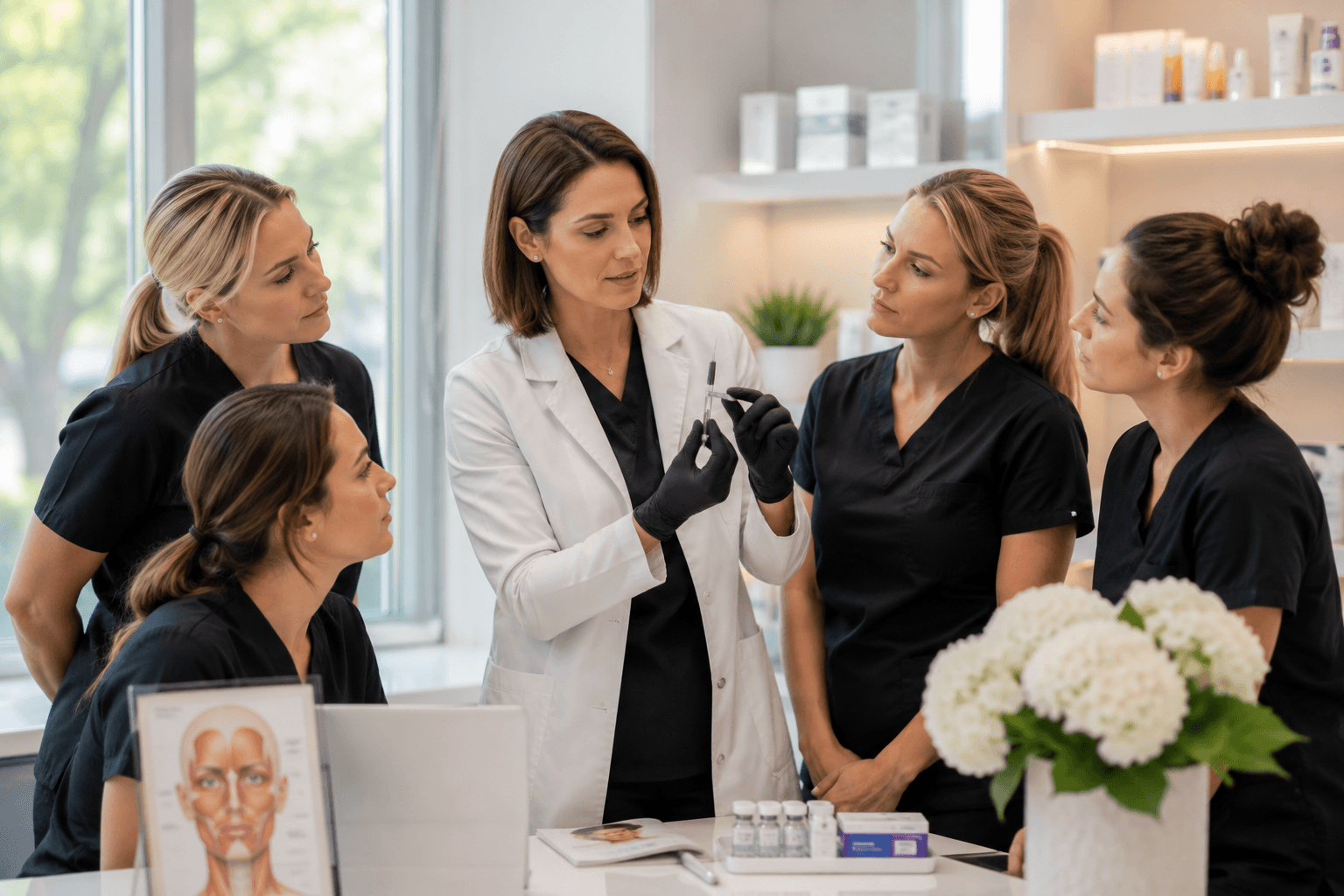
The most effective path into aesthetic medicine combines observation, mentorship, and supervised practice. This is exactly the model used at Elite Academy, founded by Dr. Joelle Lieman, a board-certified OB/GYN and member of the American Academy of Aesthetic Medicine. For more than ten years, Dr. Lieman has trained aesthetic professionals through in-person, hands-on instruction based in Needham, Massachusetts, with more than one hundred clinicians completing her programs to date.
Options range from a Basic Shadowship, which lets clinicians observe real patient encounters before ever picking up a syringe, to the more advanced Elite Mentorship Program, which pairs ongoing guidance with direct clinical practice. Clinicians can also go deeper into specific techniques, such as the Vampire Series intensive hands-on training for PRP-based procedures or the Sculptra: Beyond the Label course for advanced biostimulator technique in the face and body.
Because Elite Academy trains exclusively licensed healthcare professionals rather than the public, the entire curriculum is built around clinical safety, technique, and confidence, not marketing gimmicks. You can see the full range of current offerings on the Courses & Programs page, and read more about Dr. Lieman's background on the About page.
Frequently Asked Questions
Is aesthetic medicine a recognized medical specialty? It's best described as a practice area rather than a formally board-recognized specialty like dermatology or surgery. Clinicians from multiple licensure backgrounds, including nursing, physician assistant practice, and medicine, enter the field through dedicated aesthetic training rather than a single residency pathway.
Can nurse practitioners and PAs really practice aesthetic medicine? Yes. Many of the most successful aesthetic professionals are NPs, PAs, and RNs who pursued additional hands-on education after licensure. Scope of practice varies by state, so it's worth confirming Massachusetts-specific guidelines alongside your clinical training.
How is aesthetic medicine different from cosmetic injectable training specifically? Cosmetic injectable training usually refers to the technical skill of administering neuromodulators and fillers. Aesthetic medicine is the broader field that also includes biostimulators, PRP-based regenerative treatments, and sexual wellness procedures.
Why do so many clinicians travel to Needham, Massachusetts for training? Needham is home to Elite Academy's in-person training programs, where Dr. Joelle Lieman offers direct, hands-on mentorship rather than remote or video-based instruction, which many clinicians find essential for building real procedural confidence.
What's the best way to start exploring the field before committing to a full program? A shadowship is usually the lowest-pressure entry point. It lets you observe real consultations and procedures firsthand before deciding which area of aesthetic medicine fits your goals.
So, Is Aesthetic Medicine Your Next Chapter?
Aesthetic medicine isn't a trend that's going to fade quietly into the background. It's a genuine, growing field built around helping patients feel more confident in their own skin, quite literally. If you're a licensed clinician near Needham, Massachusetts who's been curious about where this path could lead, the best next step isn't more reading, it's watching real training in action. Explore the full lineup on the Courses & Programs page, hear from past students on the Testimonials page, or reach out directly through the Contact page to see where you might fit in.
.png)