Updated August 2026.
If you have ever caught yourself scrolling through injector before-and-afters at midnight, wondering if you could do that too, you are not alone. Every year, more physicians, physician assistants, nurse practitioners, and registered nurses start asking the same question: am I actually qualified to become one of today's aesthetic professionals, or is this just a nice idea that does not fit my background?
This article is not about products, machines, or price lists. It is about you, your license, your clinical instincts, and whether this path genuinely fits who you are. We will walk through the identity questions first, then the licensing realities, then how people actually break into aesthetic medicine, using what we see here in Needham, Massachusetts, where a lot of hands-on cosmetic training happens in person.
Am I Qualified to Become an Aesthetic Professional?
This is usually the first question, and it is a fair one. The honest answer is that qualification has less to do with your current job title and more to do with your license type, your clinical judgment, and your willingness to keep learning after your initial degree.
What Background Do Most Aesthetic Professionals Come From?
Most people who move into this field come from fairly traditional clinical roles. Think labor and delivery nurses, primary care NPs, emergency medicine PAs, family medicine physicians, and OB/GYNs. Few of them started their careers planning to inject neuromodulators or perform PRP-based procedures. They arrived at aesthetic medicine later, often after realizing they wanted more autonomy, more patient connection, and a different pace than their original setting offered.
Does My Current Specialty Matter?
Your specialty matters less than your baseline comfort with anatomy, sterile technique, and patient assessment. A dermatology background is not required. What matters more is whether you can read a face, listen to what a patient is really asking for, and translate that into a safe, individualized plan. That skill is teachable, but it takes real repetitions to build, which is exactly why structured, hands-on exposure matters so much early on.
Which License Types Can Actually Perform These Procedures?
Licensing rules vary by state and by procedure, and they change over time, so this is general orientation rather than legal advice. That said, the professionals who typically pursue careers as aesthetic professionals, and who make up the vast majority of people training in this space, are physicians, physician assistants, nurse practitioners, and registered nurses. Each of these license types can play a meaningful role in aesthetic practice, though scope of practice, supervision requirements, and delegation rules differ depending on where you are licensed and employed.
If you already hold one of these licenses, the more useful question is not "can I legally do this in general" but "what does my specific state and employer allow, and where do I need additional training to practice safely and confidently." That is a conversation worth having with your state board and your employer directly, alongside any clinical training you pursue.
Is This Field a Good Fit for My Personality and Clinical Style?
Not every excellent clinician loves this work, and that is worth being honest about before you invest time and money into it.
Do You Enjoy Consultative, Relationship-Driven Care?
Aesthetic work is consultative by nature. Patients are not simply telling you their symptoms and waiting for a diagnosis. They are describing how they feel about their appearance, what changed over time, and what they hope to feel like again. If you genuinely enjoy that kind of conversation, rather than finding it tedious or overly subjective, that is a strong signal this path could suit you.
Are You Comfortable With Precision and Repetition?
The technical side rewards steadiness and patience. Small differences in placement, depth, and technique produce noticeably different results, and improvement comes from doing the same movements correctly many times, often under someone else's watchful eye before doing them independently. If you liked the procedural, hands-on parts of your clinical training more than the paperwork, that tends to translate well here.
How Is This Different From Traditional Clinical Roles?
In many traditional roles, success is measured against clinical guidelines and objective outcomes. In aesthetic practice, success is also measured by how a patient feels about the result, which adds a layer of communication and expectation-setting that some clinicians find energizing and others find draining. Neither reaction is wrong, but it is worth sitting with honestly before you commit to a new direction.
How Do People Usually Break Into Aesthetic Training?
There is no single accepted path, which is part of what makes this field confusing to newcomers. In practice, most aesthetic professionals get started through some combination of three entry points.
Shadowing an Experienced Injector
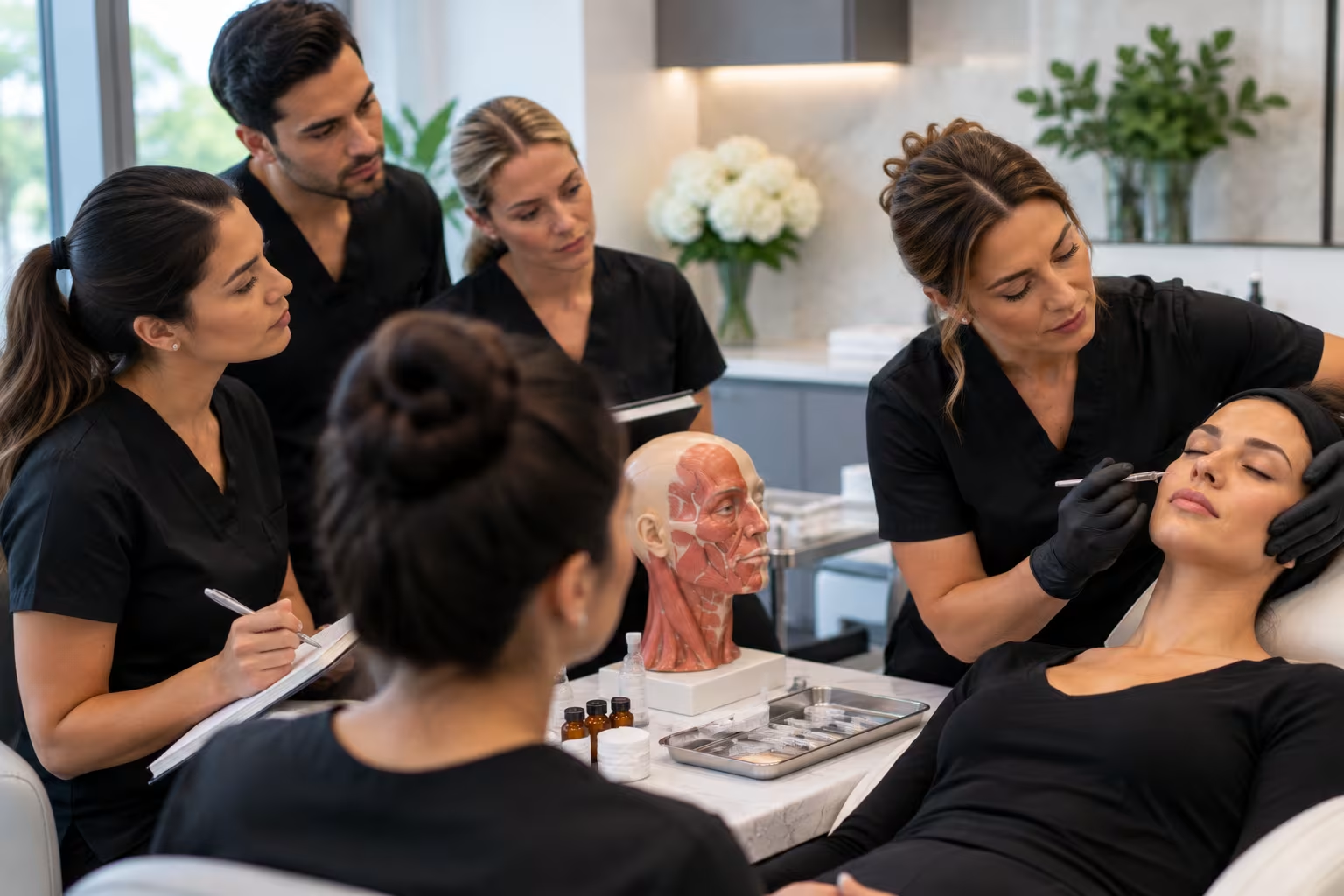
Shadowing is often the first real step, and for good reason. Watching real consultations and real procedures, rather than reading about them or watching recorded videos, gives you an honest sense of the pace, the patient interactions, and the level of precision involved before you commit further. Elite Academy's Basic Shadowship is built around exactly this idea. It is a half-day, in-person experience in Needham, Massachusetts, where you observe Dr. Joelle Lieman directly in a real clinical setting rather than a simulated one. You can see the full details on the Basic Shadowship course page.
Structured, Hands-On Courses
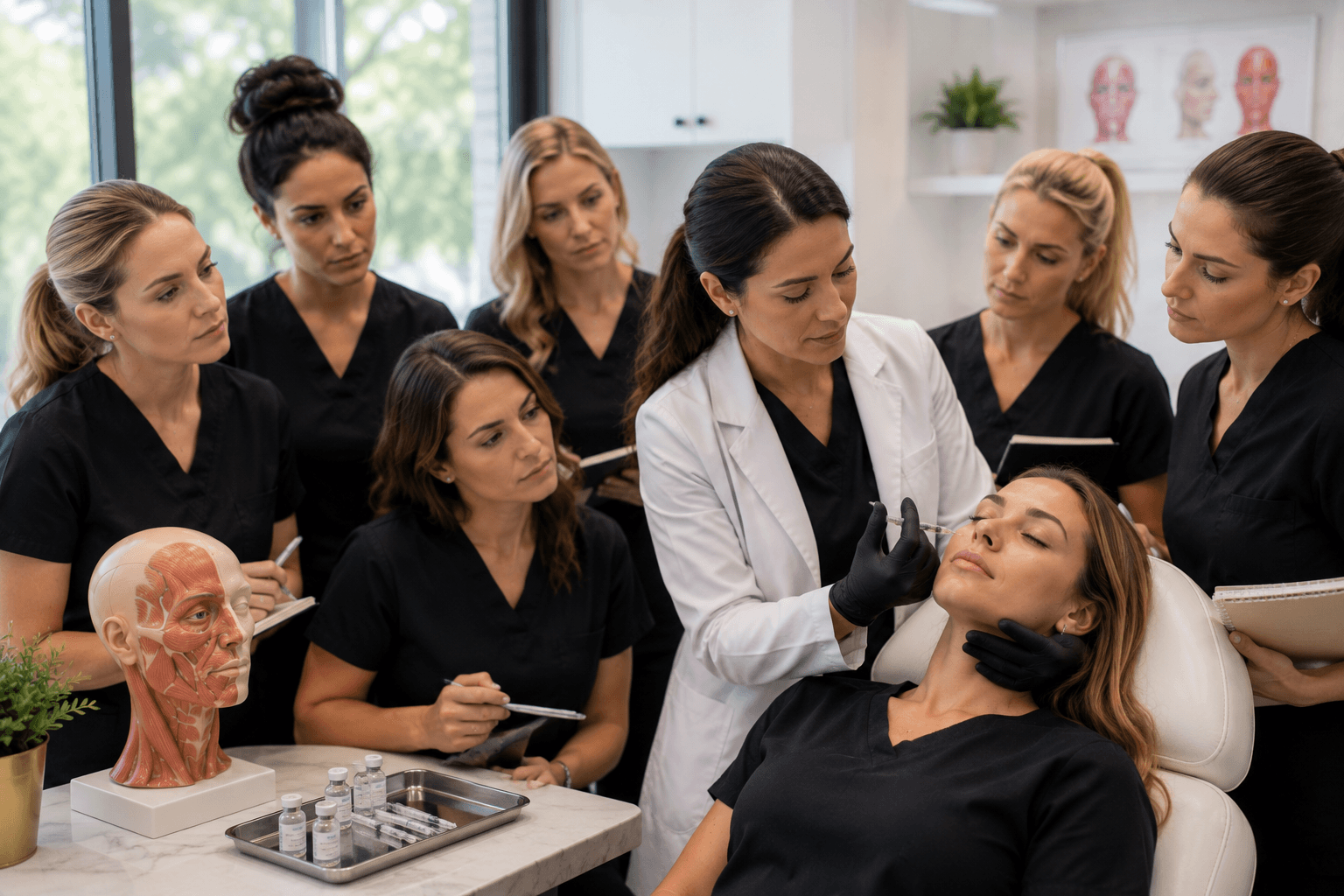
Once you have a feel for the work, structured courses fill in the technical and clinical depth that shadowing alone cannot provide. This usually means procedure-specific, hands-on cosmetic training, delivered in person so you can practice technique under direct supervision rather than only in theory.
Mentorship for Ongoing Growth
For clinicians who are already practicing but want to sharpen their skills and build a sustainable business around them, mentorship tends to be the more valuable next step. Elite Mentorship+ is a three-month program designed for experienced injectors who want to elevate both their clinical technique and their business acumen, with guidance from Dr. Lieman, a board-certified OB/GYN and member of the American Academy of Aesthetic Medicine who has led Elite Academy for over ten years and trained more than one hundred professionals.
What Does a Typical Week Actually Look Like?
New clinicians often picture aesthetic work as glamorous and light on clinical rigor. In reality, a typical week blends consultation time, procedural time, documentation, and ongoing skill-building, much like any other clinical setting, just with a different focus. Consultations tend to run longer than a typical primary care visit because expectation-setting matters so much. Procedural blocks require steady hands and full attention to detail. And because techniques and products in aesthetic medicine evolve constantly, continuing education is not optional if you want to stay sharp and safe for your patients.
What Should I Expect When Getting Started?
Expect a learning curve, even if you are already an experienced clinician. The anatomy is familiar, but the techniques, patient communication style, and pace of decision-making are often new. Expect to start slowly, build confidence through supervised repetition, and gradually take on more complexity. This is precisely why in-person, hands-on aesthetic training, like what happens in Needham, Massachusetts through Elite Academy's programs, tends to produce more confident, safer practitioners than self-paced online content alone.
Frequently Asked Questions
Do I need a background in dermatology or plastic surgery to become an aesthetic professional? No. Many successful aesthetic professionals come from nursing, family medicine, OB/GYN, or emergency medicine backgrounds. What matters more is your clinical judgment and willingness to build new procedural skills.
Which licenses typically pursue aesthetic training? Physicians, physician assistants, nurse practitioners, and registered nurses are the license types most commonly pursuing careers in this field, though your exact scope of practice depends on your state and employer.
Is shadowing really necessary before taking a full course? It is not mandatory, but it is genuinely helpful. Observing real consultations and procedures before enrolling in hands-on cosmetic training gives you a clearer, more honest picture of whether this path fits you.
How long does it take to feel confident as an aesthetic professional? Confidence builds gradually through supervised practice. Most clinicians feel a meaningful shift after structured, hands-on training combined with ongoing mentorship rather than a single course alone.
Do I have to travel to Needham, Massachusetts for training? Elite Academy's hands-on programs, including Basic Shadowship and Elite Mentorship+, take place in person in Needham, Massachusetts, since procedural skills are best learned through direct, supervised practice.
So, Ready to Trade Your Scrubs for a Syringe (Metaphorically Speaking)?
Becoming an aesthetic professional is not about reinventing who you are as a clinician. It is about redirecting the skills you already have toward a field that rewards precision, empathy, and steady hands in equal measure. If the questions in this article felt more exciting than intimidating, that is usually a good sign.
The most reliable way to find out for certain is to see the work up close. Learn more about Elite Academy and Dr. Lieman's approach on the About page, browse the full lineup on the Courses + Programs page, read what past students have said on the Testimonials page, or reach out directly through the Contact Us page to ask what your first step in Needham, Massachusetts might look like.
.png)