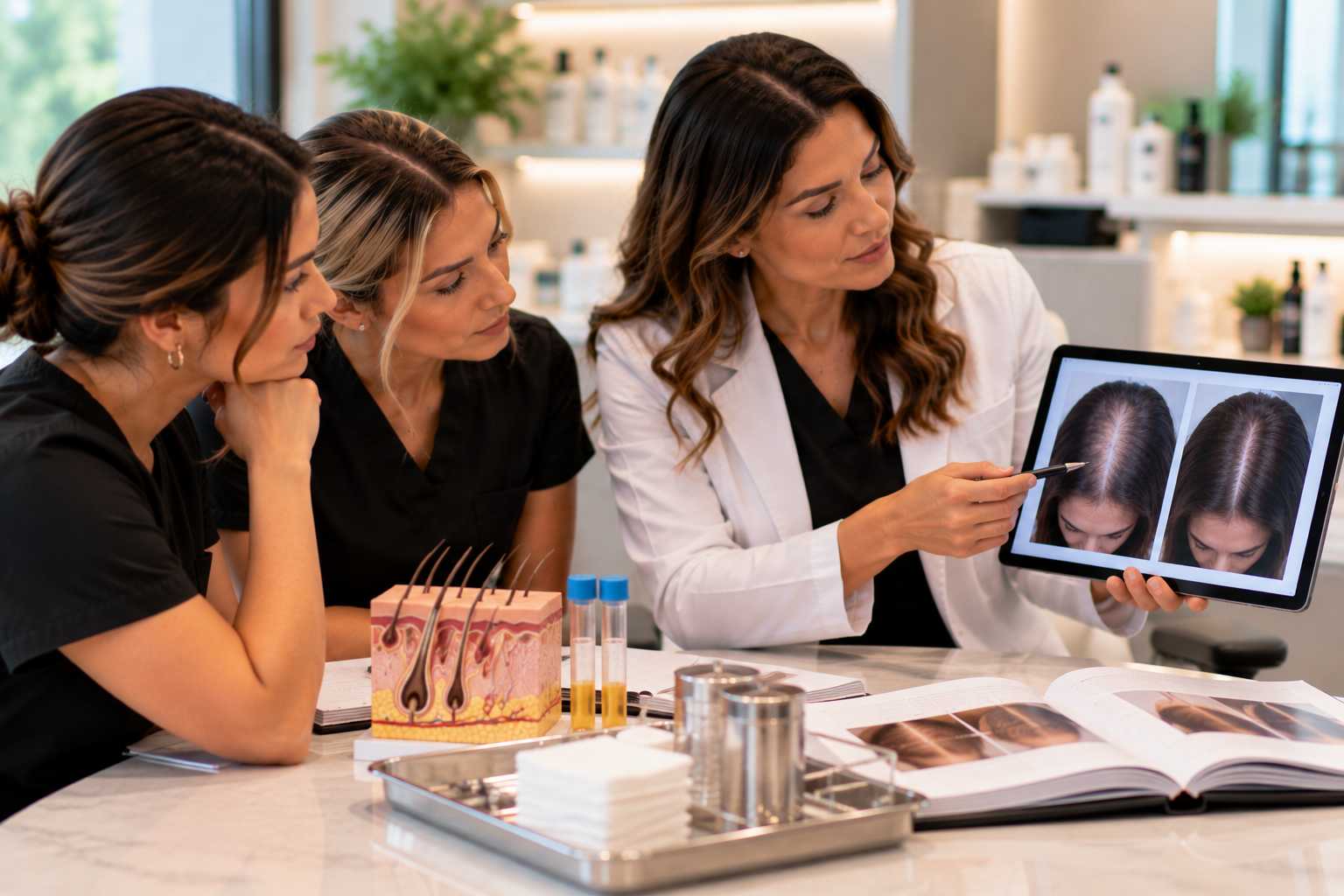
Patients who love what Sculptra did for their temples or cheeks often ask the next logical question: "Can we do this on my arms?" or "What about my knees?" It is a fair question, and for experienced injectors it opens a new area of practice. It also raises important responsibilities, because body applications sit outside the product's FDA-approved facial indications.
This article looks at what off-label Sculptra use means in practice, how body concerns differ from facial ones, which providers are best positioned to add body treatments, and how hands-on training in Needham can help you approach these areas with care and sound clinical judgment.
Is Sculptra FDA-Approved for Use on the Body?
No. Sculptra Aesthetic is FDA-approved for specific facial indications, and body applications such as the buttocks, arms, and knees are considered off-label. Off-label use is a recognized part of medical practice, but it calls for thorough training, careful patient selection, and documented informed consent.
Sculptra's approval history is listed in the FDA premarket approval database, which shows its original approval and subsequent supplements. Off-label means the FDA has not reviewed that particular application for safety and effectiveness, so clinical judgment and informed consent carry more weight. That distinction should shape every body consultation you hold.
What does off-label mean for your consent process?
It means your consent conversation needs to be specific. Patients should understand that the use is off-label, what results are realistic, how many sessions may be needed, what side effects can occur, and that outcomes vary. Document that conversation clearly. Patients who feel informed up front tend to be more patient through the gradual timeline that collagen stimulation requires.
How Does Sculptra Work Differently From a Traditional Filler?
Sculptra contains poly-L-lactic acid, a biostimulatory material that encourages the body's own collagen production over time rather than filling space immediately. Results build gradually across a series of sessions, which is why technique, dilution, and patient expectations matter so much.
The FDA describes poly-L-lactic acid as a long-lasting material delivered in a series of injections over several months, with effects that may last up to two years, on its FDA-approved dermal fillers page. For providers, this changes the whole treatment conversation. Instead of promising an immediate change, you are planning a staged course of treatment and preparing patients to see improvement unfold over months.
What Body Concerns Do Patients Bring Up Most Often?
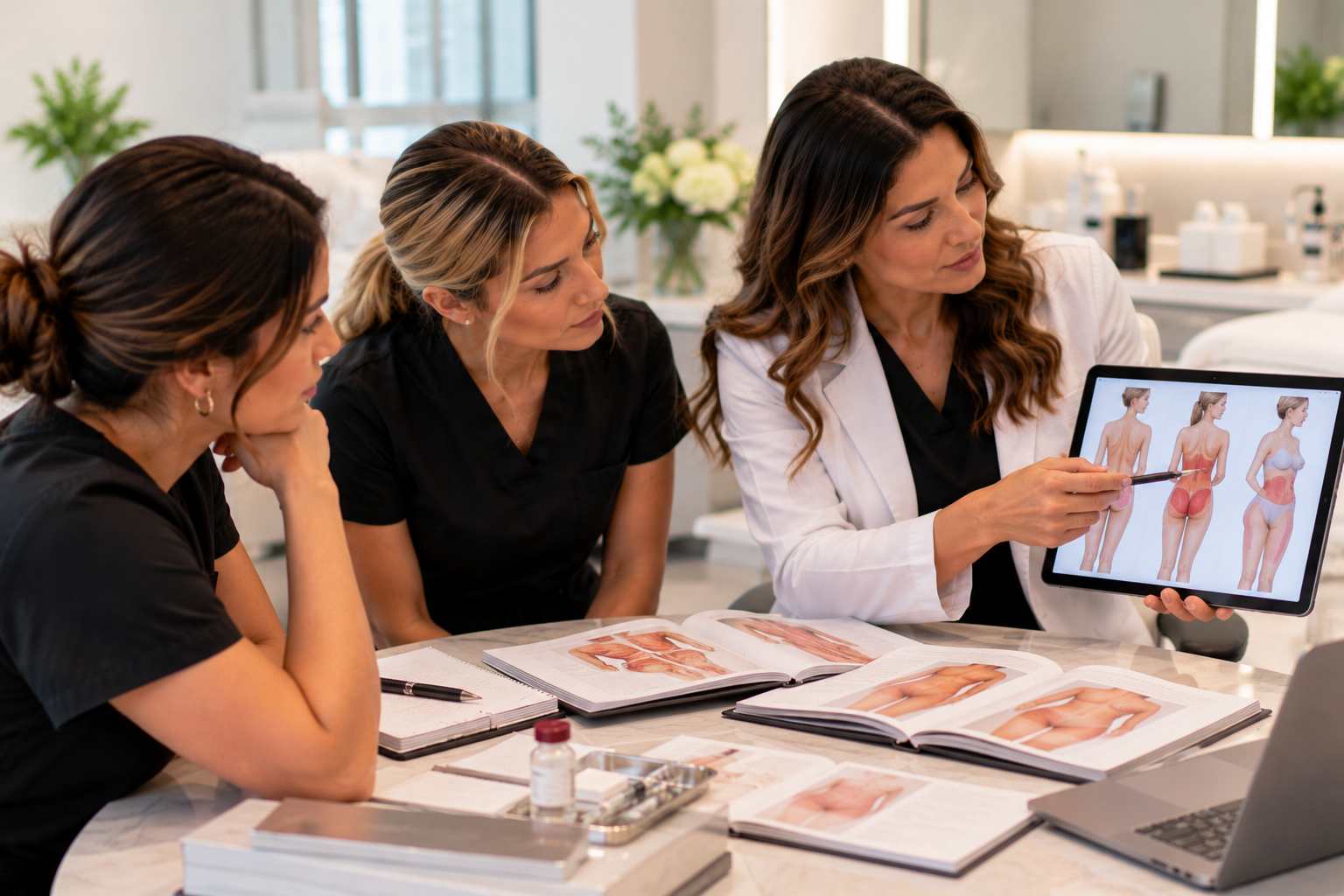
Patients often ask about crepey or lax skin on the upper arms, loose skin above the knees, and volume or contour changes in the buttocks. These concerns are commonly linked to collagen loss, aging, and changes after weight loss. Each area has its own anatomy, skin thickness, and treatment considerations.
Upper arms
Many patients notice thinning, crepey skin on the inner and back of the upper arms as collagen declines. Assessment includes skin quality, laxity, and how much of the concern is skin texture versus excess tissue.
Knees
Skin above the knee can wrinkle and sag with age and sun exposure. Patients often bring this up when they feel self-conscious wearing shorts or dresses. Careful mapping matters because the area moves constantly.
Buttocks
Requests for the buttocks often relate to contour, texture, or mild volume changes. Assessment needs to separate what a biostimulator can reasonably address from what would require a surgical consultation, so the patient's expectations stay grounded.
Who Is a Good Candidate for Off-Label Sculptra Body Treatment?
A good candidate has mild to moderate skin laxity or texture concerns, realistic expectations, and the patience for a gradual, multi-session process. Patients with significant skin excess or very high expectations may be better served by a surgical referral. Clear screening protects both the patient and your reputation.
Part of advanced practice is knowing when to say "not yet" or "not this." Patients who want dramatic, immediate change are rarely happy with any biostimulatory approach. Patients who understand the process and value natural-looking improvement over time tend to be the best fit.
Which Injectors Should Consider Adding Sculptra Body Treatments?
Body applications are best suited to injectors who already have a solid foundation in facial aesthetics and want to grow their skill set. Experienced injectors, nurse practitioners and physician assistants with established aesthetic practices, and medspa owners looking to expand services tend to benefit most.
Experienced injectors who already treat the face with confidence often find body work a natural next step, though it requires learning new anatomy, dilution approaches, and injection patterns.
Nurse practitioners and physician assistants in aesthetic practice can broaden their treatment menu, provided body applications fall within their scope and supervision arrangements under Massachusetts rules.
Physicians who already work with injectables may appreciate the clinical judgment involved in off-label assessment and consent.
Medspa owners and aspiring owners should think about how body services fit their brand and patient base, and make sure every provider performing them is trained and supported.
Newer injectors may want to build a strong facial foundation first. Observing Dr. Joelle Lieman in practice through the Basic Shadowship can be a helpful early step before moving into advanced work.
What Does Hands-On Sculptra Training in Needham Cover?
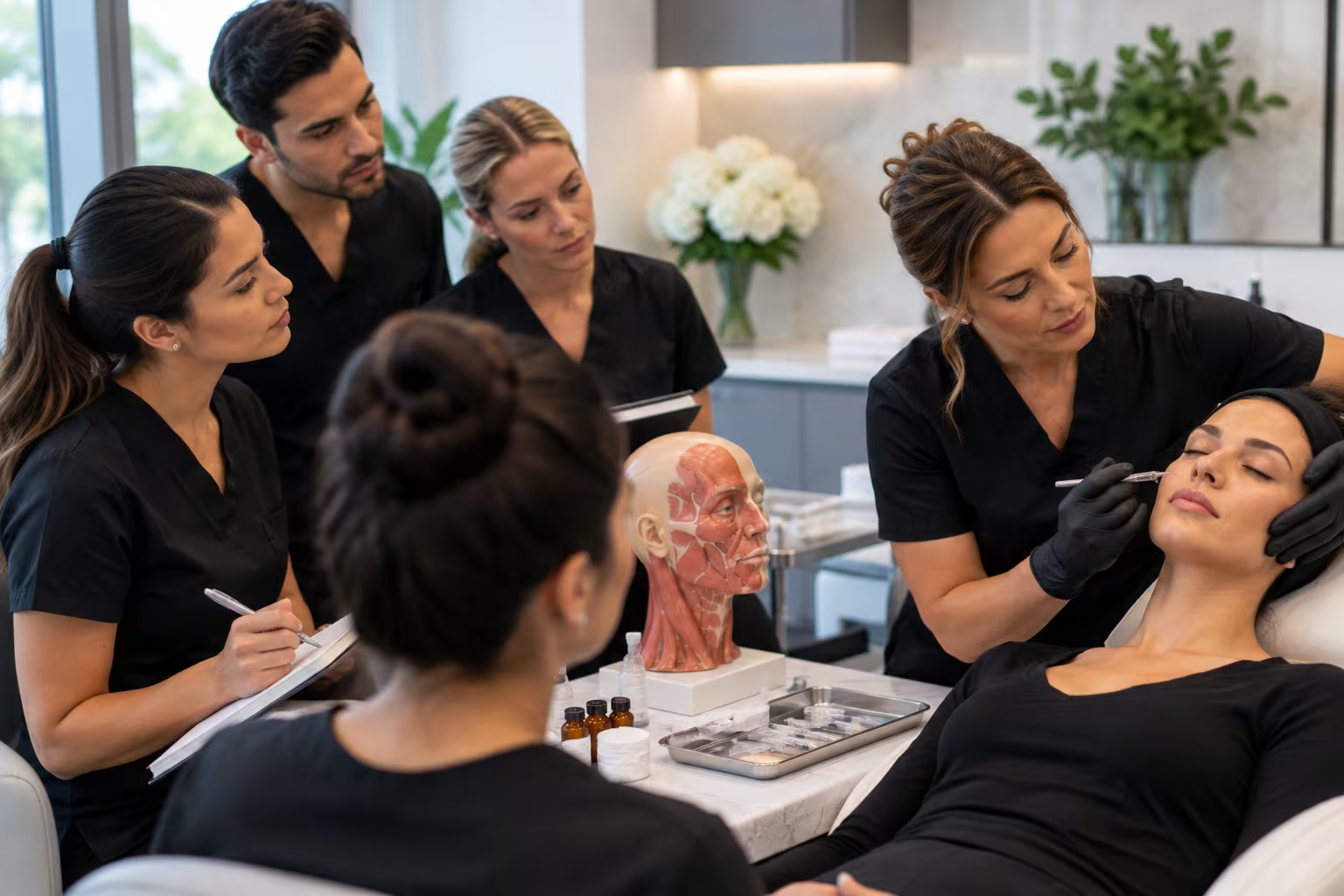
Elite Academy's Sculptra: Beyond the Label (Face + Body) is a half-day, in-person, hands-on course held in Needham, Massachusetts. It covers anatomical assessment, mapping treatment areas, reconstitution methods, area-specific injection techniques, and supervised injections on various facial and body areas, with advanced techniques for areas including the buttocks, arms, and knees.
The Sculptra: Beyond the Label (Face + Body) course is designed for both on- and off-label applications, which makes it a practical fit for injectors who want to move beyond the face with a supervised, structured foundation. The training takes place at 1 Chapel St in Needham, a Norfolk County town west of Boston.
The academy is led by Dr. Joelle Lieman, a Board Certified Obstetrician and Gynecologist and member of the American Academy of Aesthetic Medicine. If you are traveling in, the Where to Stay page lists hotels within about a 10-minute drive and notes parking beside the building and on Chapel Street.
For background on facial applications, you can also read why cheeks hollow with age and how Sculptra can help and how to get proper Sculptra training in Needham.
How Do Massachusetts Rules Affect Who Can Perform Sculptra Treatments?
Who can perform Sculptra injections depends on licensure, supervision, and state board rules, and completing a course does not by itself authorize anyone to perform a procedure. Massachusetts providers should confirm their scope with the appropriate board before offering any new treatment.
Physicians can consult the Massachusetts Board of Registration in Medicine, nurses and nurse practitioners can consult the Massachusetts Board of Registration in Nursing, and physician assistants can consult the Massachusetts Board of Registration of Physician Assistants. Confirming your scope and any supervision requirements before you add body treatments is part of practicing responsibly.
Frequently Asked Questions
Is Sculptra approved for the buttocks?
No. Sculptra Aesthetic's FDA approval covers specific facial indications. Use in the buttocks, arms, knees, and other body areas is off-label and requires informed consent and sound clinical judgment.
How long does it take to see Sculptra results on the body?
Results develop gradually as collagen builds, typically over a series of sessions spread across several months. Patients should be prepared for a staged process rather than an immediate change.
Can nurses do Sculptra in Massachusetts?
It depends on licensure, supervision arrangements, and current board rules. Registered nurses and nurse practitioners should confirm their scope with the Massachusetts Board of Registration in Nursing before performing any injectable procedure.
Do I need facial injection experience before learning Sculptra body techniques?
A strong facial foundation is very helpful, since body work builds on assessment, dilution, and injection skills. Newer providers often benefit from observing experienced clinicians first.
Where is Elite Academy's Sculptra course held?
The Sculptra: Beyond the Label (Face + Body) course is held in person at the Needham training location at 1 Chapel St, Needham, MA 02492.
Beyond the Face, Within Good Judgment
Body applications can be a rewarding extension of your aesthetic practice when they are built on careful assessment, honest consent, and supervised technique. The goal is not to treat every area a patient asks about but to treat the right patients, in the right way, with realistic expectations.
If you are ready to take that step, explore Sculptra: Beyond the Label (Face + Body) or browse all Courses + Programs. For questions about fit or current course details, contact the Elite Academy team or start on the Elite Academy homepage.