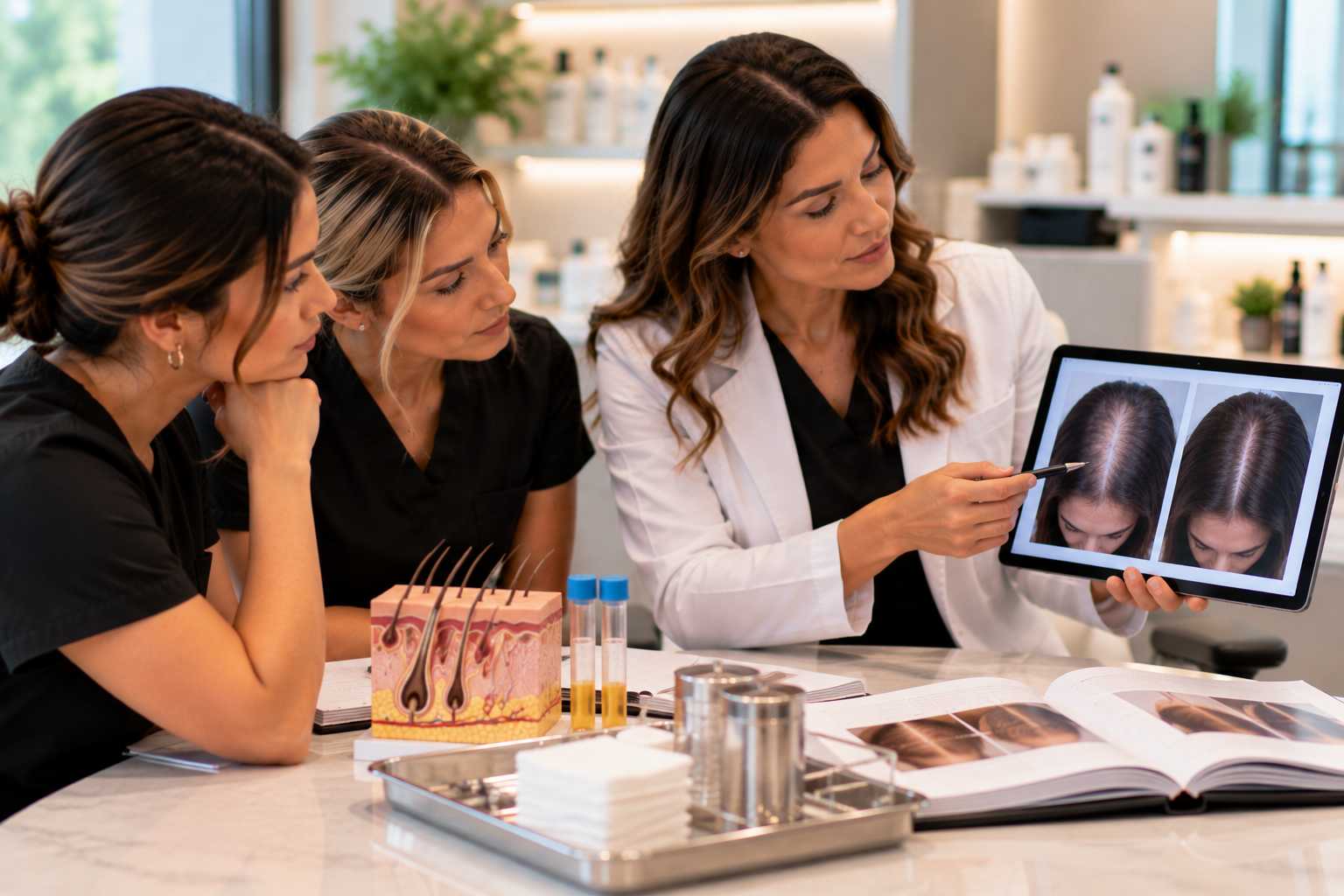
Thinning hair is one of those concerns patients carry quietly for a long time. They notice a wider part, a smaller ponytail, or more hair in the drain, and they start searching online long before they mention it to a clinician. When they finally do ask, many already have a treatment in mind, and platelet-rich plasma is often near the top of the list.
For providers on the North Shore, from Topsfield to Beverly and beyond, that question is an opportunity and a responsibility. This guide covers why patients lose hair, which concerns call for medical evaluation first, how to select good candidates for PRP-based hair restoration, how to set honest expectations, and how to approach Vampire Hair Restoration training through the Vampire® Series at Elite Academy's Needham training location.
Why Are So Many Patients Asking About PRP for Hair Loss?
Patients are drawn to PRP because it uses components of their own blood and is often described as a natural option. Interest has grown alongside wider awareness of regenerative aesthetic treatments. For providers, that interest means more consultations, and more need for careful screening.
Many patients have already tried over-the-counter products or supplements before they ask. Some arrive frustrated, others hopeful. Either way, they expect the provider to know whether PRP is a reasonable option for their specific situation. That judgment starts with understanding why the hair is thinning in the first place.
What Causes Hair Thinning and Hair Loss?
Hair loss has many possible causes, including genetics, hormonal changes, thyroid problems, autoimmune conditions, medications, stress, nutrition, and hair care practices. Hereditary pattern hair loss is the most common cause. Identifying the likely cause comes before discussing any procedure.
The Mayo Clinic's overview of hair loss lists hereditary male- and female-pattern hair loss as the most common cause, along with hormonal shifts from pregnancy, childbirth, menopause, and thyroid problems. MedlinePlus also notes that hair loss can be linked to certain diseases, medicines, stress, a low-protein diet, and poor nutrition. Each cause carries different implications for treatment.
Patterns worth noticing during the consultation
Gradual thinning at the crown or along the part suggests a different process than sudden shedding after illness or childbirth. Patchy hair loss, scalp inflammation, or scarring raises other questions entirely. A careful history, including medications, recent life events, and family history, often tells you more than the scalp exam alone.
When Should Thinning Hair Be Evaluated Before Any Aesthetic Procedure?
Thinning hair should be medically evaluated first when the pattern is sudden, patchy, scarring, or accompanied by other symptoms. Possible thyroid issues, nutritional deficiencies, autoimmune conditions, or medication effects need appropriate workup or referral. An aesthetic procedure should never delay a needed diagnosis.
This is where provider judgment protects patients. A woman with diffuse shedding and fatigue may need lab work before anything else. A patient with patchy loss may need a dermatology referral. When the cause is unclear, referring out is part of responsible care, not a missed opportunity.
Who Is a Good Candidate for PRP Hair Restoration?
Good candidates generally have thinning hair from a cause that has been evaluated, realistic expectations, and the patience for a multi-session process with variable results. Patients looking for dramatic regrowth or a permanent fix are usually better served by an honest conversation about limits.
PRP for hair loss is generally considered off-label, and the evidence is promising but still developing. Study designs and protocols vary, and results differ from patient to patient. That makes candidate selection and informed consent especially important. Patients should understand that improvement, if it occurs, tends to be gradual and may require ongoing maintenance.
Setting expectations in plain language
Phrases such as "Some patients see thicker-looking hair over several months, and some see little change" are more honest than broad promises. Explain the number of sessions you anticipate, possible side effects such as scalp tenderness, and how you will assess progress, ideally with consistent photographs.
Which Providers Are Well Suited to Offer PRP Hair Restoration?
PRP hair restoration tends to fit providers who are comfortable with blood draws, sterile preparation, scalp injections, and thorough medical history taking. Nurse practitioners, physician assistants, physicians, experienced injectors, and medspa owners building regenerative services are common fits.
Nurse practitioners and physician assistants in dermatology, primary care, or aesthetic practices often see hair concerns early and can lead the evaluation and consent conversation.
Physicians, including those in women's health, may encounter hair thinning linked to postpartum or menopausal changes and appreciate a structured approach to adding a procedural option alongside appropriate medical care.
Experienced injectors who already offer PRP-based facial treatments may find hair restoration a logical extension, although the scalp involves different technique and patient selection considerations.
Medspa owners and aspiring practice owners can add hair restoration as part of a regenerative service line, provided every provider performing it is trained and screening is consistent.
Registered nurses may support patient preparation or procedures, depending on scope and supervision arrangements.
What Does the Vampire® Series Include for Hair Restoration?
Elite Academy's Vampire® Series Intensive Hands-On Training includes Vampire Hair Restoration among the procedures it certifies providers in through the Cellular Medicine Association. The course is held in person in Needham, with class sizes limited to five students per session.
According to the Vampire® Series product page, the course certifies participants through the Cellular Medicine Association in the Vampire Breast Lift®, Vampire Face Lift®, Vampire Facial®, Vampire Wing Lift®, Vampire Hair Restoration, O-Shot®, and Priapus Shot® (P-Shot). It is offered as a full-day option (8 hours) or a half-day option limited to the O-Shot and P-Shot procedures, so providers focused on hair restoration would look at the full-day option. This certification is not a license and does not change your scope of practice.
Elite Academy is led by Dr. Joelle Lieman, a Board Certified Obstetrician and Gynecologist and member of the American Academy of Aesthetic Medicine. The academy's testimonials page lists providers who have completed the Vampire Series.
Newer providers who want to see an aesthetic practice in action before committing to procedural training can consider the Basic Shadowship, a half-day observation experience with Dr. Lieman that does not include hands-on injecting.
How Can Topsfield Providers Attend Hair Restoration Training in Needham?
Vampire Hair Restoration training is offered in person only, at Elite Academy's training location at 1 Chapel St in Needham. Providers traveling from Topsfield and the North Shore can plan a day trip or an overnight stay in Needham.
The Where to Stay page recommends staying in Needham when traveling in and lists the Sheraton Boston Needham, Homewood Suites Needham, and Residence Inn Needham within about a 10-minute drive. There is a public lot beside the building and metered parking along Chapel Street. Neither of Elite Academy's online courses covers hair restoration, but both are available to licensed medical providers who want to start learning remotely; you can find them on the Courses + Programs page.
What Should Massachusetts Providers Confirm About Scope of Practice?
Who can perform PRP procedures depends on licensure, supervision arrangements, and Massachusetts board rules. Completing a course or earning a course certification does not on its own authorize you to perform a procedure.
Physicians can review requirements through the Massachusetts Board of Registration in Medicine, nurses and nurse practitioners through the Massachusetts Board of Registration in Nursing, and physician assistants through the Massachusetts Board of Registration of Physician Assistants.
Frequently Asked Questions
Does PRP work for thinning hair?
The evidence is promising but still developing, and results vary. PRP for hair loss is generally considered off-label, so careful patient selection and informed consent are essential.
What should be ruled out before PRP for hair loss?
Sudden, patchy, or scarring hair loss, and thinning linked to thyroid problems, nutritional issues, autoimmune conditions, or medications, should be evaluated or referred before any aesthetic procedure.
What is Vampire Hair Restoration?
Vampire Hair Restoration is a named procedure that uses platelet-rich plasma, included in Elite Academy's Vampire® Series, which certifies providers through the Cellular Medicine Association.
Is the Vampire Series certification a license?
No. The certification is through the Cellular Medicine Association. It is not a professional license or board certification and does not expand scope of practice.
Is Vampire Hair Restoration part of the half-day option?
No. The half-day option is limited to the O-Shot and P-Shot procedures. Hair restoration is part of the broader full-day option.
Where is the Vampire Series held?
It is held in person at Elite Academy's Needham training location, 1 Chapel St, Needham, MA 02492.
Root Cause First, Then the Needle
The best hair restoration conversations start with "why is this happening?" rather than "how many sessions?" When you pair a careful workup with honest expectations and well-trained technique, PRP can become a thoughtful option within your practice rather than a promise you have to walk back.
To explore hands-on training, visit the Vampire® Series Intensive Hands-On Training page. For questions about fit or current course details, contact the Elite Academy team or start on the Elite Academy homepage.