Updated August 2026. If you are a nurse, nurse practitioner, physician assistant, or physician who keeps hearing the same request from patients, "can you do something more advanced than a regular facial," you already know the frustration of not having a confident answer. Standard facials are relaxing and useful for maintenance, but they cannot deliver the collagen stimulation, skin texture improvement, or longevity that patients are increasingly asking about after seeing PRP treatments discussed online. For clinicians who want to close that gap safely and credibly, the answer lies in structured, hands-on aesthetic training, not a weekend video course.
This article is written for licensed healthcare professionals, not patients. If you are considering adding PRP-enhanced facial treatments to your practice, here is what you need to understand about how these procedures work, what proper training actually involves, and where to get real hands-on experience near Needham, Massachusetts.
Why Are Patients Asking for More Than a Standard Facial?
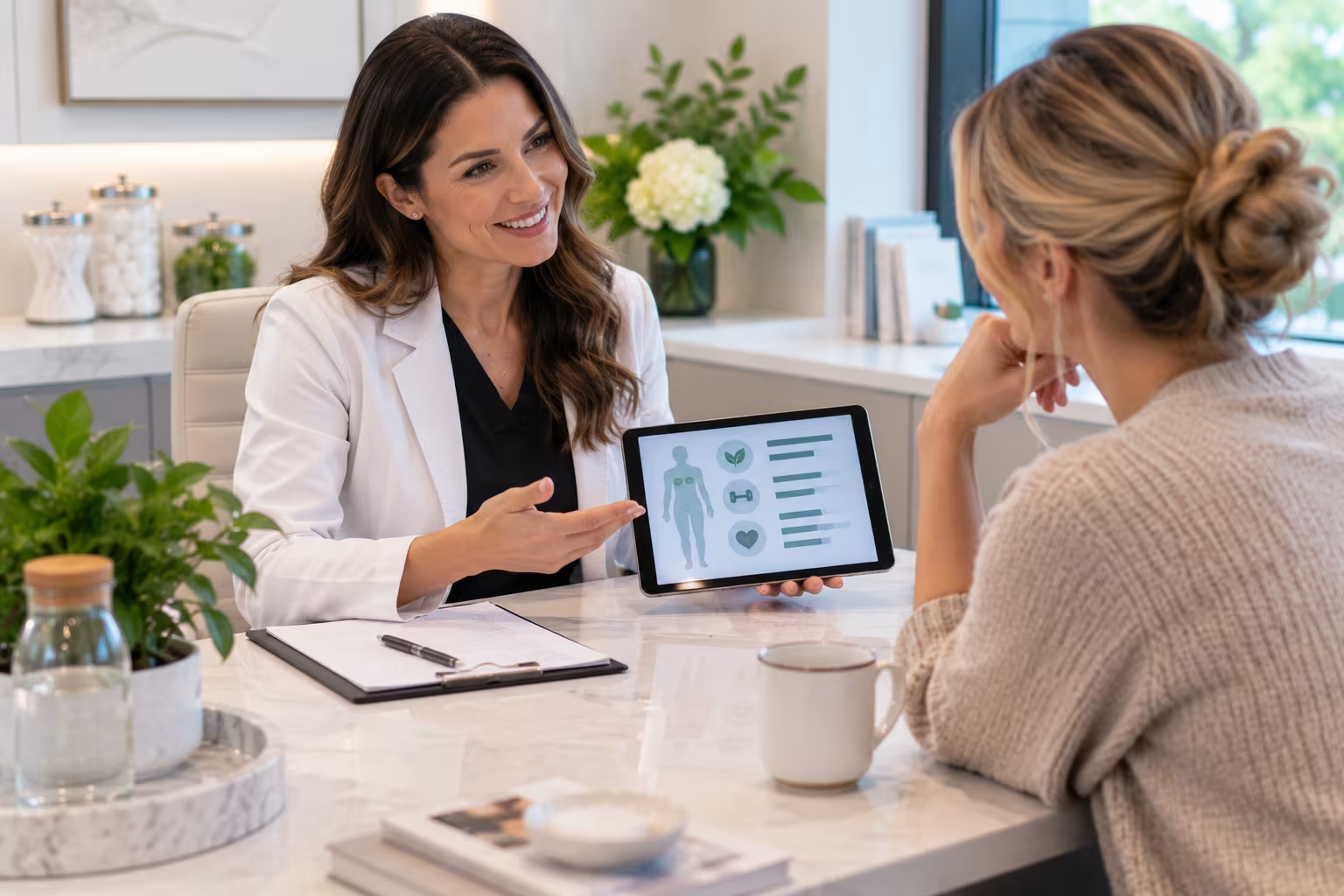
Patient expectations have shifted. Many arrive at consultations already familiar with terms like "Vampire Facial" and PRP (platelet-rich plasma), and they want to know whether their provider offers it. When a practice can only offer spa-grade facials, that conversation often ends with a referral out, and a lost opportunity.
What Are Patients Actually Looking For?
Most patients asking about advanced facial treatments want one or more of the following:
- Longer-lasting improvement in skin tone and texture than a topical facial provides
- A natural approach that uses their own blood plasma rather than synthetic fillers
- A treatment that can be paired with microneedling or fine injection technique for deeper results
- A provider who can explain, in plain language, how the treatment actually works
If your practice cannot answer these questions with confidence, patients often go elsewhere, sometimes to providers with less clinical training than you already have.
Why Referring Patients Out Isn't a Long-Term Strategy
Referring patients to another clinic for PRP facials means losing continuity of care, losing revenue, and losing the chance to build trust around a full aesthetic menu. For nurses and NPs especially, who are already trusted for injectables and skin health guidance, learning to perform PRP facials in-house is a natural extension of an existing scope of practice.
What Is a PRP Facial and How Is It Different From a Regular Facial?
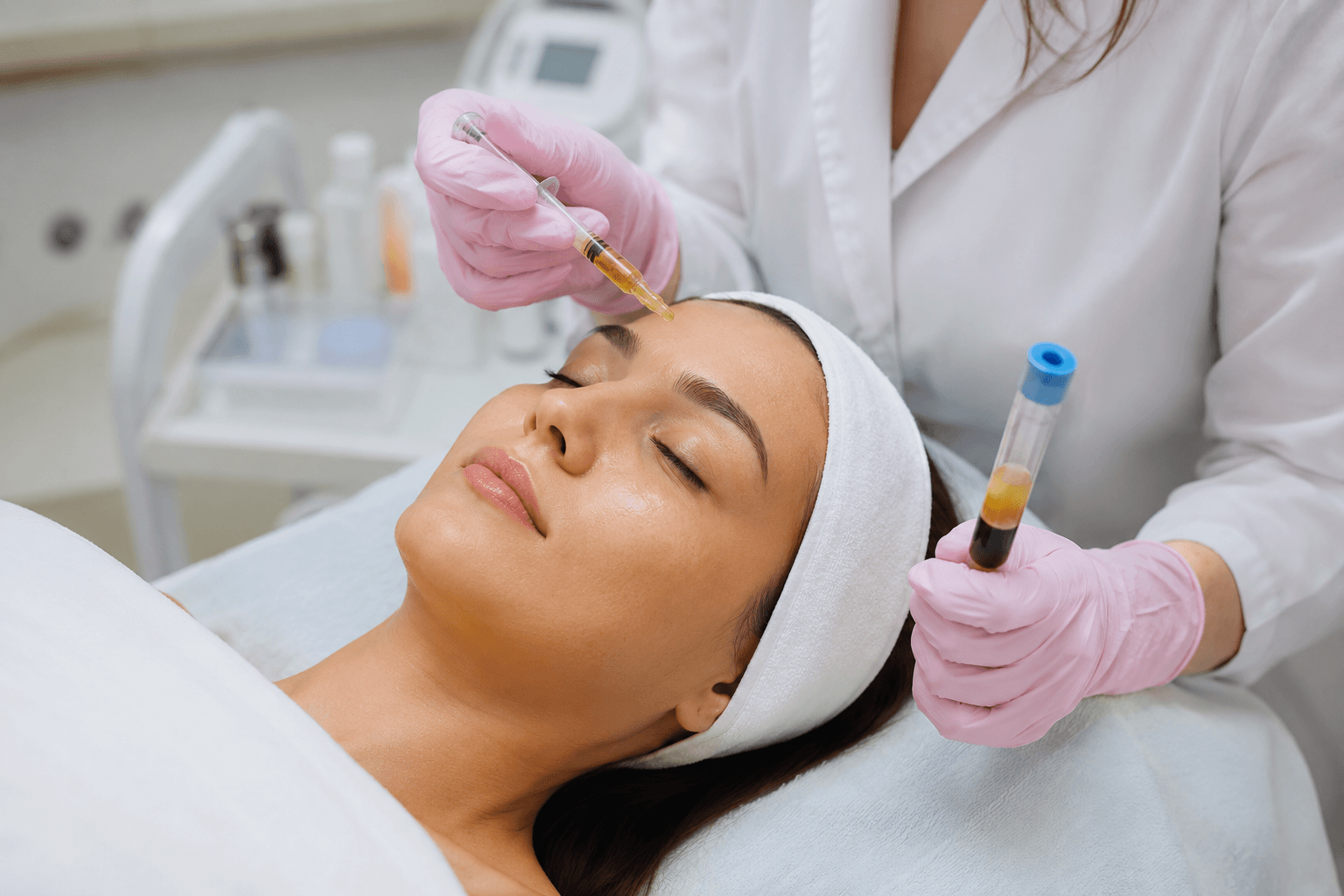
A PRP facial, often called a Vampire Facial, involves drawing a small amount of the patient's own blood, processing it in a centrifuge to concentrate the platelets and growth factors, and then applying that plasma to the skin, typically alongside microneedling. The growth factors stimulate the body's own collagen and elastin production over time, which is why results tend to build gradually and last longer than a topical or hydrating facial.
This is fundamentally a medical procedure, not an esthetic service. It requires an understanding of blood draw technique, centrifuge protocols, sterile processing, skin anatomy, and how to layer PRP with microneedling depth or fine injection points for different treatment goals.
Why Can't This Be Learned From an Online Course Alone?
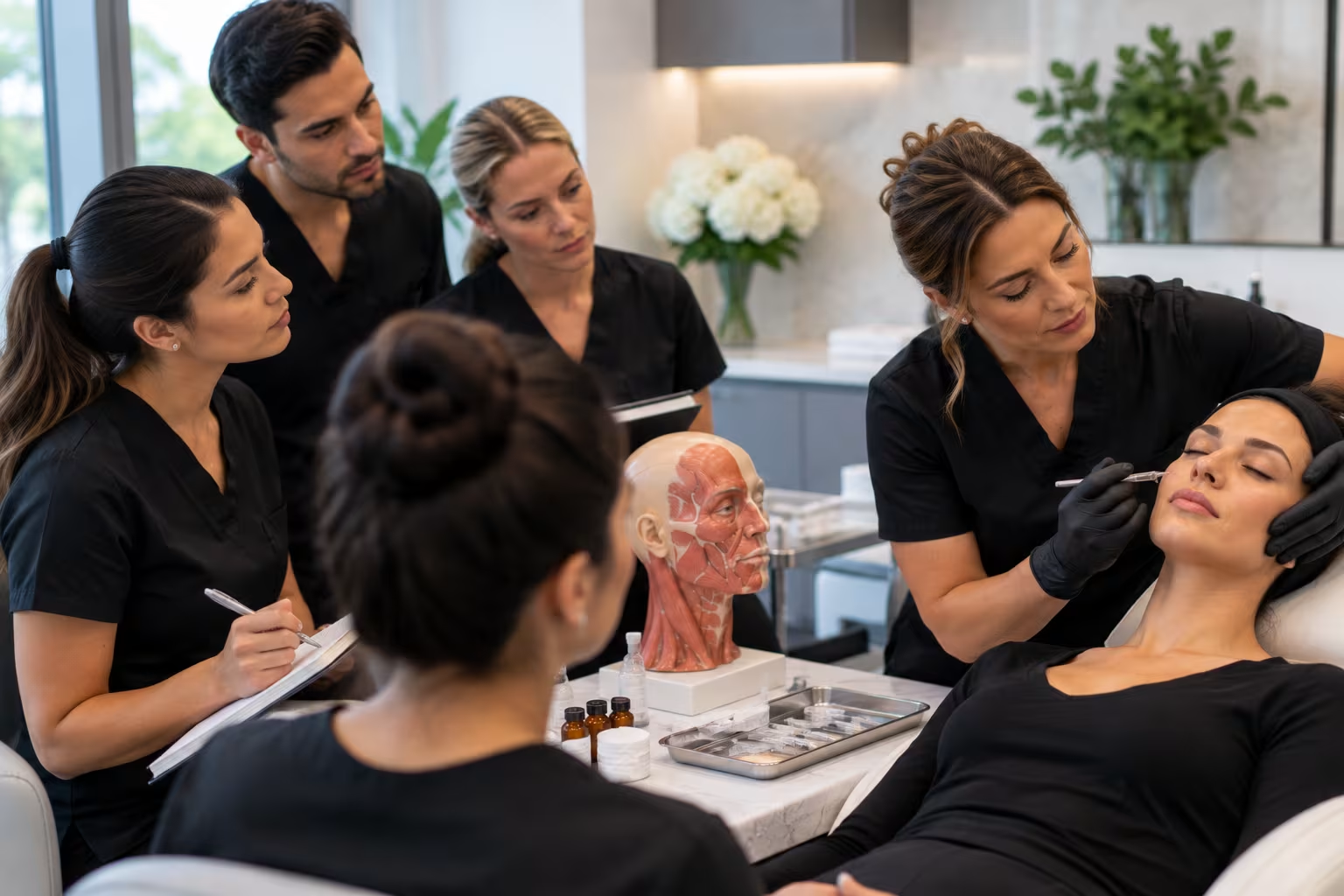
Video-based courses can explain the science, but they cannot teach a clinician how plasma actually looks and behaves when properly separated, how to judge microneedling depth on different skin types, or how to troubleshoot a difficult blood draw. These are motor and judgment skills that only develop with supervised, hands-on repetition. This is precisely the gap that in-person training is meant to close.
What Does Real Hands-On PRP Facial Training Involve?
Proper training for PRP-based facials should cover far more than the injection or needling step itself. A comprehensive program should include:
- Patient selection and contraindications, including which patients are not good candidates for PRP procedures
- Blood draw and centrifuge protocol for consistent, high-quality plasma yield
- Microneedling depth and technique across different facial zones and skin types
- Combining PRP with other cosmetic injectables or modalities for enhanced, layered results
- Safety, sterile technique, and how to manage minor complications
- Realistic patient communication about timeline, downtime, and expected results
Training that skips any of these areas leaves a clinician technically able to perform the procedure but not truly prepared to run it safely and confidently in a real practice setting.
What Does the Vampire Series Training at Elite Academy Cover?
Elite Academy, based in Needham, Massachusetts, offers the Vampire Series, Intensive Hands-On Training, a course built specifically to teach licensed healthcare professionals how to perform PRP-enhanced aesthetic and wellness treatments, including the Vampire Facial, PRP-based hair restoration, breast lift, and intimate rejuvenation procedures.
The training is led by Dr. Joelle Lieman, a board-certified OB/GYN and member of the American Academy of Aesthetic Medicine, who has run Elite Academy for more than ten years and trained over one hundred healthcare professionals. Rather than watching a screen, participants work through real technique under direct guidance, from blood draw and plasma preparation to microneedling and injection method, which is exactly the kind of practice that builds true clinical confidence.
Who Is Elite Academy Training Designed For?
Elite Academy's programs are built exclusively for licensed healthcare professionals, including physicians, physician assistants, nurse practitioners, and registered nurses. This is not a patient-facing service. If you are a licensed provider looking to formally expand into facials built on PRP science, or to strengthen your broader aesthetic training background, this course is designed around your existing clinical foundation.
What Other Programs Support This Path?
For clinicians who want to see the academy's approach before committing to hands-on training, the Basic Shadowship offers a half-day, in-person observation with Dr. Lieman. Providers who are already injecting and want to elevate both clinical skill and business strategy may also be interested in the Elite Mentorship+ program, a three-month course built for experienced injectors. You can review the full course catalog to see how these programs work together.
What Should Clinicians Expect From In-Person Training in Needham, Massachusetts?
Because the Vampire Series is taught in person in Needham, participants get direct, real-time feedback rather than delayed video review. This matters most in the moments that are hardest to teach remotely, such as adjusting microneedling pressure on thinner under-eye skin or recognizing when plasma separation has not concentrated properly.
Clinicians traveling to Needham for training can also review course details through the academy's site, and many providers take a look at testimonials from past attendees to understand what the experience is like before enrolling.
Frequently Asked Questions
Does Elite Academy train patients or only healthcare professionals? Elite Academy trains licensed healthcare professionals exclusively, including physicians, PAs, NPs, and RNs. It is not a patient-facing spa or clinic, and the Vampire Series and other programs are built specifically for providers who want hands-on aesthetic training.
What makes PRP facials different from the facials offered at a spa? A PRP facial uses the patient's own concentrated plasma, typically combined with microneedling, to stimulate collagen production over time. Spa facials focus on cleansing, hydration, and short-term appearance rather than biological stimulation.
Do I need previous injection experience to take the Vampire Series course? The course is designed for licensed professionals, and prior experience with cosmetic injectables or aesthetic procedures is helpful, though the hands-on format is structured to build both technique and confidence during training.
Can PRP facial training be combined with other services my practice already offers? Yes. Many providers pair PRP facial technique with existing injectable or wellness services. Training addresses how to layer PRP with other treatments appropriately based on patient goals and skin condition.
Where is the hands-on training held? Training takes place in person in Needham, Massachusetts, allowing participants to work directly with Dr. Lieman rather than learning through video modules alone.
Ready to Trade the Referral List for a New Skill Set?
Every patient you currently send elsewhere for a PRP facial is a patient trusting someone else with a service you could confidently offer yourself. If you are a licensed provider ready to move past theory and into real, supervised practice, explore the Vampire Series training or contact Elite Academy to learn more about upcoming sessions in Needham, Massachusetts. Visit the Elite Academy homepage to see the full range of programs built for professionals ready to grow their practice the right way.
.png)