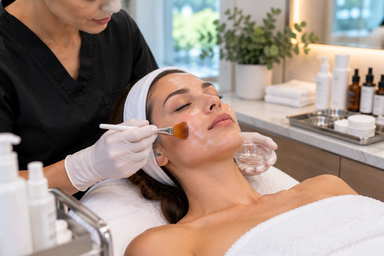
Dull skin, uneven texture, and fine lines that seem to appear overnight are some of the most common complaints walking into aesthetic practices right now. Patients have seen the results online, they know the term platelet rich plasma, and they are asking their providers whether a facials treatment built around their own blood plasma is worth trying. The problem is that plenty of providers have never actually been trained to perform it well.
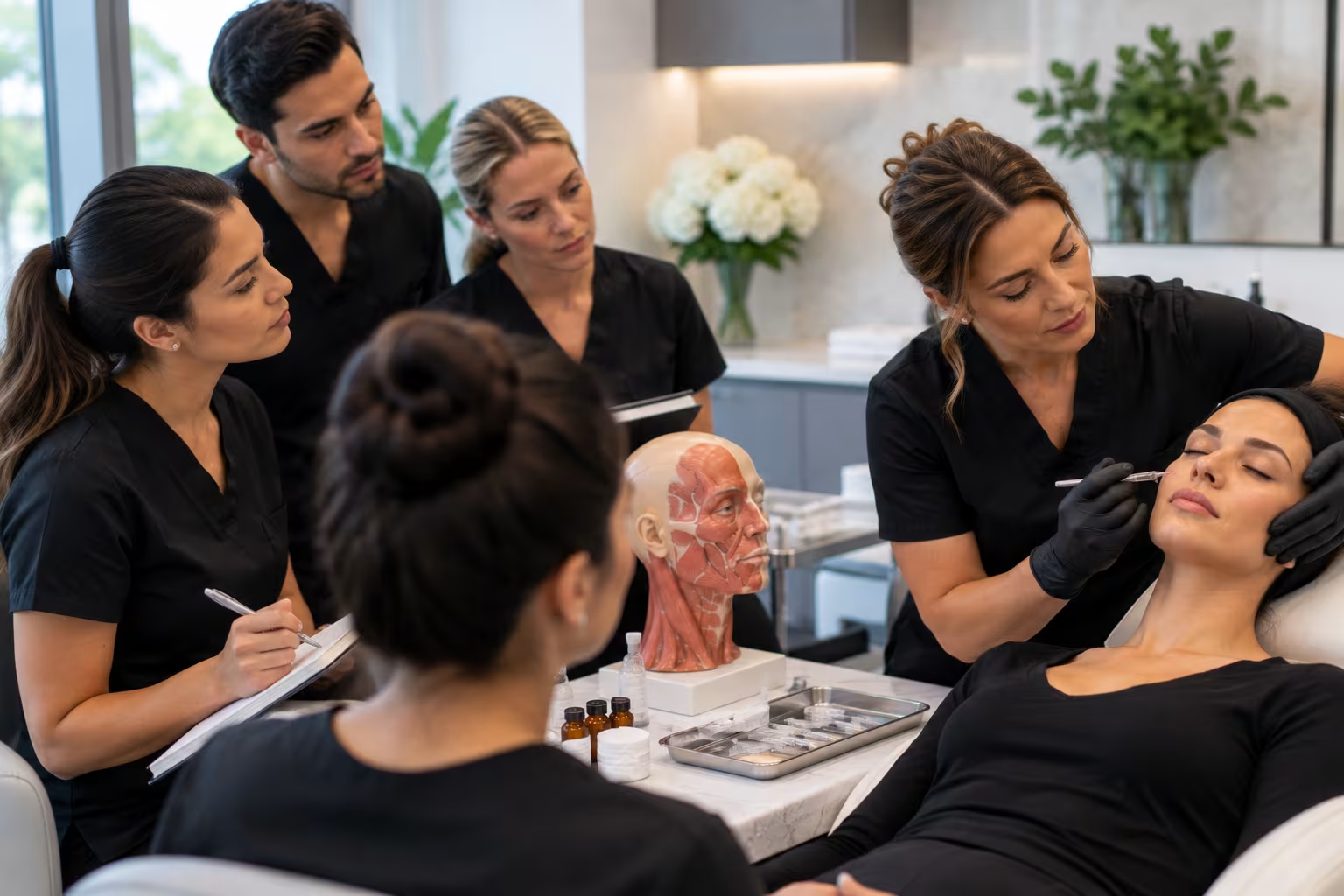
That gap is exactly what Elite Academy in Topsfield, Massachusetts set out to close with its Vampire Series training, an intensive hands on program that teaches licensed professionals how to safely and effectively deliver PRP based facial treatments. This article looks at the skin concerns driving demand, what the science behind PRP facials actually shows, and how providers can build real competency rather than guessing their way through a trending treatment.
What Skin Concerns Do PRP Facials Actually Address?
Before a provider ever picks up a microneedling device, they need to understand what is happening beneath the surface of a patient's skin. Most patients seeking this treatment are dealing with one or more of the following:
- Dull, tired looking skin that no longer bounces back after a good night of sleep
- Fine lines around the eyes, mouth, and forehead
- Uneven skin tone or texture, often tied to sun damage or aging
- Enlarged pores and a loss of overall skin firmness
- Acne scarring that has not responded to over the counter products
According to the American Academy of Dermatology, collagen production naturally declines with age, which contributes to many of these visible changes. PRP facials work by using a concentration of the patient's own platelets to stimulate collagen and elastin production, giving the skin a natural boost rather than relying on synthetic fillers.
How Does the Science Behind PRP Actually Work?
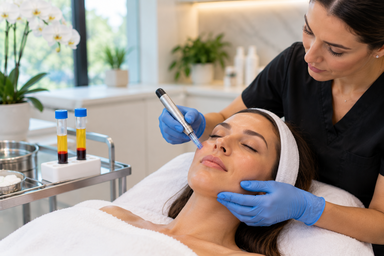
Platelet rich plasma is derived from a small blood draw that is spun in a centrifuge to separate and concentrate the platelets. Those platelets are then reintroduced into the skin, often through microneedling, to trigger the body's own healing and collagen building response. The National Institutes of Health has published research examining PRP's role in tissue regeneration, and while results vary by patient, the underlying biological mechanism is well documented.
This is precisely why hands on training matters so much. Understanding the theory is one thing, but knowing how to properly prepare the plasma, layer it into the skin, and manage patient expectations requires supervised practice.
What Should Providers Learn Before Offering This Treatment?
Providers who rush into offering PRP facials without structured training risk inconsistent results, unhappy patients, and in some cases safety issues tied to improper technique. A well built training program should cover several key areas.
Proper Blood Draw and Preparation Technique
Every successful treatment starts with correctly drawing and processing the plasma. Small errors in centrifuge timing or technique can significantly affect platelet concentration and, in turn, the results a patient sees.
Injection and Microneedling Depth
Understanding the layers of the skin and how deep to work for different concerns is one of the more nuanced parts of facials training. Too shallow and the treatment underdelivers. Too deep and the risk of bruising or complications increases.
Setting Realistic Patient Expectations
Patients often expect dramatic, immediate results. Part of a provider's job is explaining that PRP facials typically require a series of sessions with results building gradually over several weeks, which is a conversation skill Elite Academy weaves directly into its clinical training.
Where Can Providers in Topsfield Get Trained?
Elite Academy's Vampire Series: Intensive Hands On Training is built specifically for this. The course goes beyond facials to cover the broader family of PRP based treatments, including applications for hair restoration and intimate rejuvenation, giving providers a well rounded foundation in this growing category of aesthetic medicine.
Led by Dr. Joelle Lieman, a board certified OB/GYN with more than ten years of combined clinical and educational experience, the training takes place in a small group setting so every provider receives direct, hands on feedback. Providers can review full course details on the Vampire Series product page before enrolling.
Who Is a Good Candidate for This Training?
This program is designed for physicians, nurse practitioners, physician assistants, and registered nurses who want to expand their treatment menu with a technique that has strong patient demand and relatively fast recovery compared to more invasive procedures. It is a natural fit for providers who already offer injectables and are looking for a complementary, less invasive service.
Providers newer to aesthetic medicine sometimes start with the academy's Basic Shadowship program, an immersive half day observational experience, before committing to a full hands on course.
How Does This Training Fit Into a Broader Practice?
Adding PRP facials to a practice rarely happens in isolation. Many providers who complete this training go on to pursue Elite Academy's other offerings, including Sculptra: Beyond the Label for volume restoration and the Elite Mentorship Program for guidance on building a full service, referral driven practice.
Because PRP facials use a patient's own biological material, they also tend to appeal to a segment of patients who are hesitant about synthetic injectables, which can open up an entirely new patient base for a practice.
What Should Providers Expect After Completing the Course?
Graduates leave the Topsfield training with the technical skill to perform the treatment along with the consultation language needed to explain the process, set expectations, and address common patient questions. That combination is what separates a provider offering a trending treatment from one who has genuinely mastered it.
Let's Call This the Glow Up Conclusion
Patients are going to keep asking about PRP facials whether or not their provider is ready to deliver. The providers who take the time to train properly are the ones who turn a passing trend into a dependable, referral generating service. If that sounds like the direction you want your practice to go, explore the Vampire Series course or get in touch with Elite Academy to ask about the next Topsfield training dates. This article was updated in August 2026 to reflect current training availability.
Frequently Asked Questions
Are PRP facials the same as a Vampire Facial? Vampire Facial is a commonly used term for a PRP based facial treatment. Elite Academy's Vampire Series training covers this technique along with related PRP applications.
How many patients will I need to practice on during training? Hands on sessions include supervised practice, and exact patient volume can vary by cohort. Contact Elite Academy for specifics on the current Topsfield schedule.
Do I need prior injectable experience to take this course? Some hands on clinical experience is helpful, though the course is structured to support providers building this specific skill set from the ground up.
Can this training be combined with other Elite Academy programs? Yes. Many providers pair this course with Sculptra: Beyond the Label or the Elite Mentorship Program to build a more comprehensive service offering.
How soon can I start offering this treatment after training? Timing depends on your state licensing requirements and comfort level after training. The course is designed to leave providers confident and prepared to begin incorporating the technique into their practice.
.png)